Cold Extracted vs Cold Pressed Olive Oil Explained
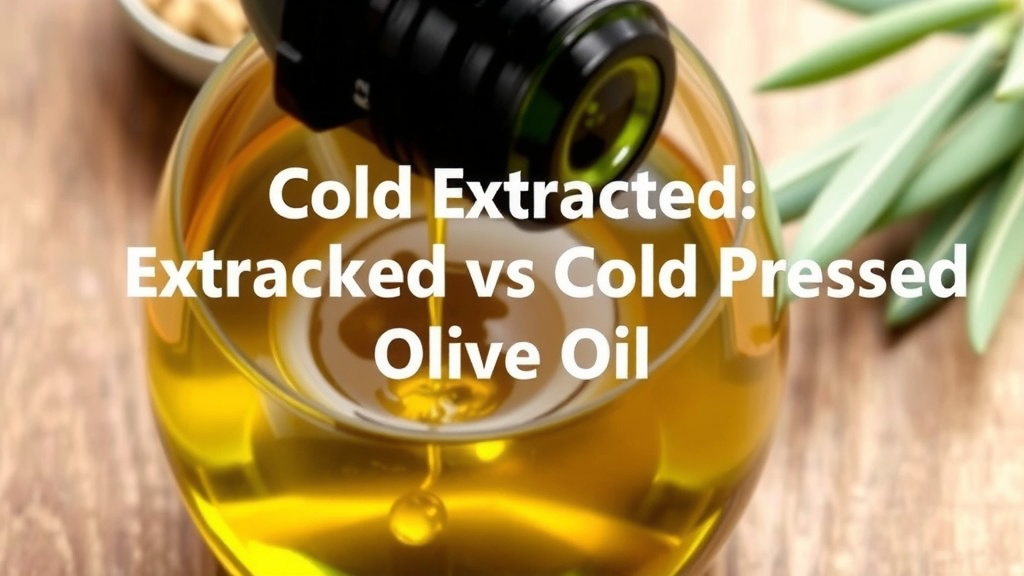
When it comes to olive oil, both cold extracted and cold pressed refer to methods that keep the oil’s quality high. While many people use the terms interchangeably, there’s a subtle, yet important, difference. Basically, cold extracted is a broader category, and cold pressed is a specific, older method within it. Think of it like this: all cold pressed oil is cold extracted, but not all cold extracted oil is cold pressed.
The key factor for both is temperature. To get the best flavor and health benefits, olive oil should be processed without high heat. This helps preserve the delicate aroma and nutrients. We found that understanding this temperature control is your best bet for picking out quality olive oil for your kitchen.
- Cold pressed is a specific method of cold extraction.
- Cold extraction is a broader term for processing olives without heat.
- Both methods aim to preserve the oil’s quality and nutrients.
- Look for “extra virgin” on the label for the highest quality oil.
- Temperature control is the main focus for preserving olive oil.
Ready to get a clearer picture of these terms? Let’s break down exactly what makes each method special so you can make the most informed choice for your cooking.
Understanding Olive Oil Processing: Cold Extraction vs. Cold Pressing
You’ve seen the labels, maybe even wondered about them. What’s the real difference between cold extracted and cold pressed olive oil? It’s a great question! While they sound similar, and often are, there’s a technical distinction. Think of it like this: cold extracted is the big umbrella term. Cold pressed is a specific, traditional way to achieve that extraction.
The key takeaway for you is that both methods aim for the same goal: preserving the olive oil’s natural goodness. This means retaining its wonderful flavor, aroma, and health-boosting properties. We found that focusing on the temperature used during processing is your best guide to quality.
The Science Behind “Cold” Processing
When we talk about “cold” processing for olive oil, we’re talking about temperature. Specifically, keeping the temperature low during the crushing and extraction stages. Why is this so important? Heat can actually damage the delicate compounds that give olive oil its amazing taste and health benefits.
Research has shown that processing olives at higher temperatures can lead to a loss of antioxidants and a less desirable flavor profile (Food Chemistry journal). This is why the “cold” part is so essential. It ensures you’re getting the purest, most flavorful oil possible.
Defining Cold Extraction
Cold extraction is the broader category. It simply means the olives are processed to extract oil without any artificial heating. Modern methods often use machines to do this. These machines spin the olive paste at high speeds. This separates the oil from the water and solids. The key is that the temperature is kept below a certain threshold. Many international standards suggest this limit to be around 27°C (80.6°F).
So, if an olive oil is labeled as cold extracted, it means no external heat was applied during the oil production process. This method is efficient and effective at maintaining oil quality. It’s become the standard for most high-quality olive oils you’ll find today.
Defining Cold Pressing
Cold pressing is a more specific, and historically older, method. It’s a type of cold extraction. In this traditional method, olives are ground into a paste. This paste is then spread onto special mats. These mats are stacked, and then a hydraulic press is used to squeeze the oil out. The “cold” aspect here means that the temperature is kept low throughout this pressing process, typically also under 27°C (80.6°F).
Think of it like squeezing juice from an orange without warming it up. You get all the fresh flavor and vitamins. Cold pressing works on the same principle. While effective, this method can be slower and less efficient than modern cold extraction techniques. You’ll often find this term used more in artisanal or organic circles.
Cold Extraction vs. Cold Pressing: A Comparison
Let’s break down how these methods stack up. It’s not about one being strictly “better” than the other in all aspects, but understanding their differences helps you appreciate the process.
| Feature | Cold Pressed | Cold Extracted |
|---|---|---|
| Method | Traditional mechanical pressing using stacked mats and a hydraulic press. | Modern mechanical separation (centrifugation) or traditional pressing. |
| Temperature | Maintained below 27°C (80.6°F). | Maintained below 27°C (80.6°F). |
| Category | A specific type of cold extraction. | A broader category that includes cold pressing and modern methods. |
| Efficiency | Can be less efficient, potentially yielding less oil per olive. | Often more efficient, yielding more oil with modern machinery. |
| Labeling | May be specified on artisanal or traditional oils. | Often implied by “extra virgin” or “cold extracted” labels. |
The Role of “Extra Virgin”
You’ll often see the term “extra virgin” on high-quality olive oil. This label is actually more about the oil’s quality and purity than the specific extraction method. Extra virgin olive oil (EVOO) has the lowest acidity level and is produced using mechanical means only – no chemicals or high heat. Both cold pressing and modern cold extraction methods are used to produce EVOO.
So, when you see “extra virgin,” you can be confident it meets stringent quality standards. Many experts agree that “extra virgin” is your best indicator of superior taste and health benefits (International Olive Council guidelines). It ensures the oil is free from defects and has a superior flavor.
What “Extra Virgin” Guarantees
When you choose an extra virgin olive oil, you’re choosing oil that has undergone strict testing. This includes chemical analysis for acidity and sensory evaluation for taste and aroma. It signifies the highest grade of olive oil available. The fact that it’s produced without heat is a non-negotiable part of this classification.
How “Cold” Methods Contribute to EVOO
The “cold” aspect of extraction or pressing is fundamental to achieving the “extra virgin” status. By avoiding heat, the oil retains its natural polyphenols. These are antioxidants that contribute to both flavor complexity and health properties. It’s this careful processing that preserves the essence of the olive.

Which Method Should You Look For?
For your everyday cooking and finishing, the most important thing is to look for the “extra virgin” designation. This label already implies that the oil has been processed without heat.
If you see “cold pressed” on the label, it’s a good sign that the producer is using a traditional method. This might appeal to you if you appreciate artisanal production. However, don’t dismiss oils labeled simply “cold extracted.” These are often made using modern, efficient technology that still adheres to strict temperature controls. If you see “first cold pressed” on the label, it’s a good sign that the producer is using a traditional method.
Ultimately, the journey from olive to oil is about preserving the fruit’s natural essence. Both cold pressing and modern cold extraction achieve this. Your best bet is to trust the “extra virgin” label as your primary guide to quality and taste.
Making the Smart Choice for Your Kitchen
Now that you understand the terms, you’re better equipped to choose the best olive oil for your needs. Here’s a quick checklist to help you:
- Prioritize “Extra Virgin” on the label.
- Ensure the processing temperature remained low (implied by EVOO).
- Consider “Cold Pressed” if you prefer traditional methods.
- Don’t shy away from “Cold Extracted” if it also carries EVOO status.
- Look for good flavor notes and aroma when tasting.
- Store your olive oil properly to maintain its quality.
Conclusion
You now have a clearer understanding of cold extracted versus cold pressed olive oil. Remember, cold extraction is the broader term for processing without heat, while cold pressing is a specific, traditional method within that category. Both methods are essential for preserving the olive oil’s delicate flavors and healthful compounds. Your best guide to quality remains the “extra virgin” label, which guarantees both low acidity and mechanical processing. For your kitchen, prioritize EVOO and choose based on whether you appreciate traditional methods or modern efficiency.
Frequently Asked Questions
Is “cold pressed” always better than “cold extracted”?
Not necessarily. While “cold pressed” indicates a traditional method, both “cold pressed” and modern “cold extracted” methods can produce high-quality oil if kept below 27°C (80.6°F). The “extra virgin” label is a stronger indicator of overall quality.
Can olive oil be labeled “cold extracted” if it’s heated slightly?
No. The definition of “cold extracted” and “cold pressed” olive oil requires that the oil is processed without added heat. International standards generally set this limit at 27°C (80.6°F) to preserve quality.
Does “cold pressed” mean it’s more expensive?
Sometimes, but not always. “Cold pressed” oils might carry a premium due to their artisanal nature. However, efficient modern “cold extraction” methods can also produce premium, high-quality oils that may be priced similarly or even higher.
If an oil doesn’t say “cold pressed,” can it still be good quality?
Absolutely. Many excellent olive oils are labeled “cold extracted” and still meet stringent quality standards. The key is that no heat was applied during processing, which is often implied by the “extra virgin” designation.
Which label should I trust more: “cold pressed” or “cold extracted”?
You should trust the “extra virgin” label the most. This designation confirms the oil is of the highest quality and was produced mechanically without heat or chemicals. Both cold pressing and cold extraction can result in extra virgin olive oil.