
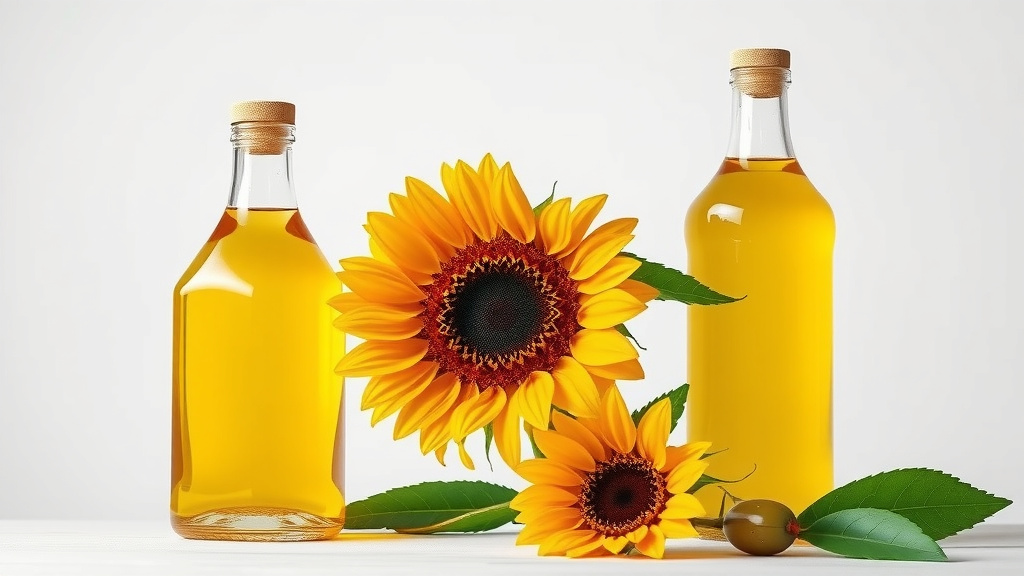
Canola vs Sunflower vs Olive Oil: Which is Healthier
When choosing between canola oil, sunflower oil, and olive oil, When choosing between canola oil and olive oil, our guide can help.olive oil is often the top choice for health and versatility, especially for dressings and lower-heat cooking. Canola oil is a good all-rounder for general cooking, while sunflower oil is best suited for high-heat applications like frying. We’ve researched these popular cooking oils to help you make the best decision for your kitchen.
Each oil brings its own set of benefits and ideal uses to your cooking. Understanding their smoke points and nutritional profiles can make a big difference in your meals. We found that considering how you’ll use the oil is key to picking the right one for the job.
- Olive oil is great for dressings and low-heat cooking.
- Canola oil is a good everyday cooking oil.
- Sunflower oil excels at high-heat frying.
- Consider smoke points and health benefits.
- Your cooking method dictates the best oil.
Let’s break down each oil so you can confidently choose which one belongs in your pantry for your next culinary adventure.
You’re standing in the grocery store aisle, staring at a wall of cooking oils. It can feel a little overwhelming, right? We get it. Picking the right oil can seriously impact your cooking, from how your food tastes to how healthy it is. Let’s sort through three popular players: canola oil, sunflower oil, and olive oil.
Understanding Your Cooking Oils: Canola, Sunflower, and Olive
Choosing the best oil depends on what you’re making. We researched these oils to see how they stack up for flavor, health, and cooking performance.
Canola Oil: The Everyday Workhorse
Canola oil is made from the seeds of the rapeseed plant. It’s a very common cooking oil in North America. Many people use it for everyday cooking tasks. You’ll find it in many baked goods and processed foods too.
Canola Oil’s Nutritional Profile
When we looked at canola oil’s nutrition, we found it’s pretty decent. It’s low in saturated fat. It’s also a good source of monounsaturated fats. These fats are considered heart-healthy (American Heart Association). It contains some omega-3 fatty acids, which are good for your body. However, the amount can vary. It also has vitamin E, an antioxidant.
Canola Oil’s Smoke Point and Cooking Uses
Canola oil has a medium-high smoke point, typically around 400°F (204°C). This makes it versatile. You can use it for sautéing, baking, roasting, and even stir-frying. Its neutral flavor means it won’t overpower your dishes. This is a big plus when you want the ingredients to shine. For general cooking needs, canola oil often fits the bill perfectly.
Sunflower Oil: The High-Heat Hero
Sunflower oil comes from pressing the seeds of sunflowers. There are different types, but we’re focusing on the refined versions commonly found in stores. These are usually treated to last longer and handle heat better.
Sunflower Oil’s Nutritional Benefits
We found that sunflower oil is rich in polyunsaturated fats, particularly linoleic acid. This is an omega-6 fatty acid. It’s also a good source of vitamin E. The exact nutritional makeup can differ based on how the oil is processed. Some experts suggest a balance of omega-6 and omega-3 fatty acids is important for health.
Sunflower Oil’s Smoke Point and Culinary Applications
Refined sunflower oil has a high smoke point, often around 450°F (232°C). This makes it an excellent choice for high-heat cooking methods. Think deep-frying, pan-searing, and grilling. Its light flavor makes it suitable for many dishes. If you’re doing a lot of frying, sunflower oil might be your go-to.
Understanding Different Sunflower Oils
It’s worth noting there are different types of sunflower oil. High-oleic sunflower oil has more monounsaturated fats and a higher smoke point. Standard sunflower oil has more polyunsaturated fats. For cooking, most people use the standard or high-oleic refined versions.
Olive Oil: The Flavorful and Healthy Choice
Olive oil is a favorite for many, especially in Mediterranean diets. It’s made by pressing whole olives. Its flavor can range from mild to quite robust.
Olive Oil’s Health Advantages
Olive oil is celebrated for its health benefits. We found it’s packed with monounsaturated fats, which are linked to a reduced risk of heart disease (Harvard Health Publishing). Extra virgin olive oil, in particular, is rich in antioxidants like polyphenols. These compounds may have anti-inflammatory properties. Many health guidelines recommend olive oil as a primary cooking fat.
Olive Oil’s Smoke Point and Best Uses
This is where olive oil gets a little nuanced. Extra virgin olive oil (EVOO) has a lower smoke point, typically around 375°F (190°C). Refined or “light” olive oils have higher smoke points, closer to 470°F (243°C). Because of its flavor and lower smoke point, EVOO is fantastic for salad dressings, marinades, drizzling over finished dishes, and low-heat sautéing. For higher heat, a lighter olive oil or a blend might be better.
Extra Virgin vs. Regular Olive Oil
Extra virgin olive oil is the least processed. It retains more of the olive’s natural flavor and beneficial compounds. Regular or “pure” olive oil is often a blend of refined olive oil and some virgin olive oil. This gives it a milder flavor and a slightly higher smoke point than EVOO, but fewer of the potent antioxidants.
Comparing the Oils: A Quick Overview
Let’s put them side-by-side. It helps to see the differences clearly. We gathered key points for your quick reference.
| Oil Type | Primary Fat Type | Smoke Point (Approx.) | Best For | Flavor Profile |
|---|---|---|---|---|
| Canola Oil | Monounsaturated | 400°F (204°C) | General cooking, baking, sautéing | Neutral |
| Sunflower Oil (Refined) | Polyunsaturated | 450°F (232°C) | Frying, searing, high-heat cooking | Light, neutral |
| Olive Oil (Extra Virgin) | Monounsaturated | 375°F (190°C) | Dressings, marinades, low-heat sautéing, finishing | Fruity, peppery, or grassy |
| Olive Oil (Light/Refined) | Monounsaturated | 470°F (243°C) | High-heat sautéing, roasting, baking | Mild |
Making Your Choice: What’s Right for Your Kitchen?
So, which oil should you reach for? It really depends on your meal. We found that having a few different oils on hand is the best strategy.
- Need an oil for a salad dressing or to finish a pasta dish? Extra virgin olive oil brings flavor and healthy fats.
- Baking a cake or making cookies? Canola oil’s neutral taste and good performance make it a solid choice.
- Planning to deep-fry some chicken or sear some steaks? Sunflower oil or a light olive oil can handle the heat.
- Just need an all-purpose oil for everyday sautéing? Canola oil or a light olive oil works well.
Think about the heat level and the flavor you want. These factors will guide you to the perfect oil for your culinary creations. Having a small arsenal of oils ensures you’re always ready to cook up something delicious!
Conclusion
You now have a clearer picture of how canola, sunflower, and olive oils fit into your kitchen. We’ve seen that olive oil shines for dressings and low-heat cooking, offering robust flavor and health benefits. Canola oil is your reliable, neutral-flavored choice for everyday tasks and baking. And for high-heat cooking like frying, sunflower oil is your best bet. Don’t feel pressured to pick just one; a well-stocked pantry with a few oils ensures you’re always prepared. Next time you’re cooking, simply match the oil to your recipe’s heat and flavor needs!
Frequently Asked Questions
Can I substitute one oil for another in recipes?
You can often substitute, but consider the smoke point and flavor. Swapping olive oil for canola in high-heat frying might cause smoking. Likewise, using a neutral oil like canola in a salad dressing won’t provide the same flavor as olive oil.
Which oil is best for weight loss?
No single oil is a magic bullet for weight loss. All cooking oils are calorie-dense. Focusing on a balanced diet and using oils in moderation, especially heart-healthy options like olive oil, is more important for overall health and weight management.
Is extra virgin olive oil always healthier than refined oils?
Generally, yes, extra virgin olive oil retains more antioxidants and beneficial compounds because it’s less processed. However, refined oils like light olive oil or canola can still be part of a healthy diet, especially when used for cooking methods where their higher smoke points are advantageous.
What does “smoke point” mean for cooking oils?
The smoke point is the temperature at which an oil starts to break down and produce visible smoke. When an oil smokes, it can develop a bitter taste and lose some of its beneficial properties. Using an oil below its smoke point is key for good flavor and health.
Can I reuse cooking oil after frying?
You can reuse cooking oil a limited number of times, especially for frying. Let the oil cool completely, strain out any food particles, and store it in an airtight container in a cool, dark place. However, its quality degrades with each use, so discard it if it smells off or darkens significantly.

![7 Best Grocery Store Olive Oil Brands [2026]](https://bestpureessentialoils.com/wp-content/uploads/2026/08/7-best-grocery-store-olive-oil-brands-2026-featured-768x432.jpg)
![7 Best Cretan Olive Oil [2026]](https://bestpureessentialoils.com/wp-content/uploads/2026/06/7-best-cretan-olive-oil-2026-featured-768x432.jpg)
![7 Best Greek Olive Oil Reddit [2026]](https://bestpureessentialoils.com/wp-content/uploads/2026/08/7-best-greek-olive-oil-reddit-2026-featured-768x432.jpg)