Coconut Oil vs Olive Oil: Which Is Best for Cooking
When deciding between coconut oil and olive oil for cooking, it really depends on your recipe and desired flavor. For high-heat cooking and a neutral taste, coconut oil often wins. For dressings and lower-heat sautéing, olive oil might be your go-to.
Both are popular choices in kitchens everywhere. They offer different benefits and perform best in specific situations. Understanding their smoke points and flavor profiles can help you make the best choice for your meals. We’ve looked at the research to help you decide. This article breaks down the differences between coconut oil and olive oil to help you choose the best one for your next culinary adventure.
- Coconut oil is great for high heat and has a mild flavor.
- Olive oil shines in dressings and lower-heat cooking.
- Consider the smoke point for your cooking method.
- Flavor is a big deciding factor for many dishes.
Let’s break down the differences between coconut oil and olive oil to help you choose the best one for your next culinary adventure.
Coconut Oil vs. Olive Oil: Which is Better for Your Cooking Needs?
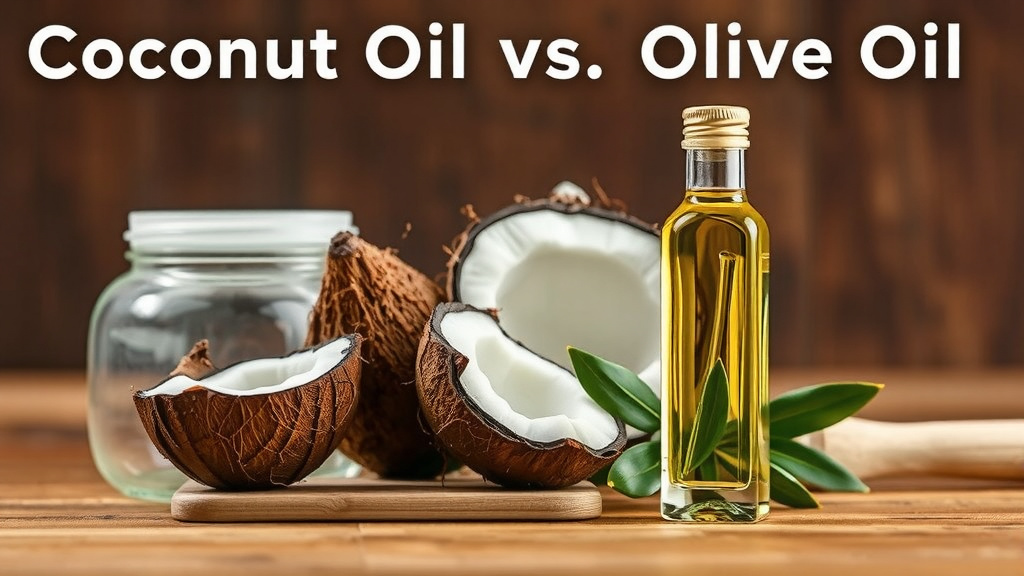
Choosing between coconut oil and olive oil for your kitchen can seem tricky. Both are healthy fats. But they each have unique properties. We’ve looked into their differences to help you pick the right one for each dish. This guide explores the differences between coconut oil and olive oil to help you pick the right one for each dish.
Understanding the Basics: Smoke Points and Flavor
The biggest differences between these two oils boil down to two key factors: their smoke point and their flavor profile. These characteristics directly influence how they perform during cooking.
What Exactly is a Smoke Point?
Think of a smoke point as an oil’s limit for heat. When an oil is heated past its smoke point, it begins to break down. This creates smoke. It can also produce harmful compounds and a burnt taste in your food. Understanding this helps you avoid a smoky kitchen and off-flavors.
Coconut Oil: A Tropical Performer
Coconut oil is made from the flesh of coconuts. It’s solid at room temperature. Many people love it for its subtle tropical aroma. Refined coconut oil has a more neutral flavor than virgin coconut oil.
Coconut Oil’s Smoke Point
Refined coconut oil generally has a smoke point around 400-450°F (204-232°C). Virgin coconut oil, with more compounds, can be a bit lower, around 350°F (177°C). This makes refined coconut oil a good choice for higher-heat cooking. You can use it for searing or baking without worry.
The Flavor of Coconut Oil
Virgin coconut oil has a distinct coconut flavor and aroma. This can be lovely in baked goods, curries, or certain Asian dishes. Refined coconut oil has had most of its flavor removed. It’s much more neutral, making it versatile for a wider range of recipes. If you want a neutral oil for frying, refined coconut oil is a solid option.
Olive Oil: The Mediterranean Staple
Olive oil comes from pressed olives. It’s a liquid fat. Extra virgin olive oil (EVOO) is the least processed. It retains the most flavor and nutrients. Regular olive oil is usually a blend of refined and virgin oils.
Olive Oil’s Smoke Point
The smoke point of olive oil varies. Extra virgin olive oil typically has a smoke point of around 375-405°F (190-207°C). Refined olive oil, or ‘light’ olive oil, can reach higher temperatures, often around 465°F (240°C). This means EVOO is best for lower to medium-heat cooking methods. It’s not ideal for high-heat frying.
The Flavor of Olive Oil
Extra virgin olive oil has a rich, fruity, and sometimes peppery flavor. This robust taste is what makes it fantastic for salad dressings, marinades, and finishing dishes. Regular or light olive oil has a milder taste. It’s better suited for general cooking where you don’t want a strong olive flavor.
When to Choose Which Oil: Practical Applications
Now, let’s get down to what matters: your cooking! When should you reach for the coconut oil and when is olive oil the champion?
High-Heat Cooking: Searing, Frying, and Roasting
For cooking methods that involve high temperatures, like pan-searing steak, stir-frying, or roasting vegetables at high heat, refined coconut oil is often the winner. Its higher smoke point prevents it from breaking down. This ensures your food doesn’t pick up a burnt taste. Many experts suggest oils with smoke points above 400°F for these tasks (Cleveland Clinic).
Low to Medium-Heat Cooking: Sautéing and Baking
When you’re gently sautéing vegetables or baking, both oils can work. If you want a hint of tropical flavor in your muffins or cookies, use virgin coconut oil. If you’re making a savory dish and want a more neutral base, refined coconut oil or regular olive oil are good. For baking where you want a slightly nutty or fruity undertone, extra virgin olive oil can add a lovely dimension.
Dressings, Dips, and Finishing Touches
This is where extra virgin olive oil truly shines. Its vibrant flavor adds so much to a simple vinaigrette. It’s also wonderful drizzled over grilled fish, roasted vegetables, or soups. The flavor is the star here, and you don’t want to cook it away. Coconut oil, especially virgin, could give an unexpected tropical twist, which might not always be desired.
Health Considerations: What the Research Says
Both oils have their own sets of health benefits. It’s helpful to understand these to make informed choices for your diet.
Coconut Oil and Its Fatty Acids
Coconut oil is high in saturated fat. A large portion of this is medium-chain triglycerides (MCTs). Some research suggests MCTs may be metabolized differently by the body. They can be a quick energy source. However, major health organizations like the American Heart Association still recommend limiting saturated fat intake, including from coconut oil.
Olive Oil and Its Monounsaturated Fats
Olive oil, particularly extra virgin olive oil, is rich in monounsaturated fats (MUFAs). These are considered heart-healthy fats. EVOO also contains antioxidants and polyphenols. These compounds are linked to anti-inflammatory effects and overall well-being. Many dietary guidelines encourage the use of olive oil as a primary cooking fat (NIH).
Making Your Choice: A Quick Checklist
Here’s a simple way to remember when to use which:
- High-Heat Frying or Searing? Reach for refined coconut oil or a high-smoke point refined olive oil.
- Baking with a Tropical Twist? Virgin coconut oil is your friend.
- General Baking or Sautéing? Refined coconut oil or regular olive oil are versatile.
- Salad Dressings or Finishing? Extra virgin olive oil offers the best flavor.
- Want Heart-Healthy Fats? Extra virgin olive oil is a top choice.
- Concerned about saturated fat? Use coconut oil in moderation.
| Feature | Refined Coconut Oil | Virgin Coconut Oil | Extra Virgin Olive Oil | Regular Olive Oil |
|---|---|---|---|---|
| Smoke Point | ~400-450°F (204-232°C) | ~350°F (177°C) | ~375-405°F (190-207°C) | ~465°F (240°C) |
| Flavor | Neutral | Coconutty, Tropical | Fruity, Peppery, Robust | Mild |
| Best For | High-heat cooking, baking (neutral) | Baking (tropical flavor), medium-heat cooking | Dressings, finishing, low-heat sautéing | General cooking, sautéing, baking (mild flavor) |
| Fat Type | Saturated (MCTs) | Saturated (MCTs) | Monounsaturated | Monounsaturated, Polyunsaturated |
Conclusion
Choosing between coconut oil and olive oil for your kitchen comes down to your recipe’s needs. Refined coconut oil is your champion for high-heat searing and frying due to its high smoke point and neutral flavor. For delicate dressings or finishing dishes, the robust taste of extra virgin olive oil truly shines. Remember to consider the flavor profile you want to achieve. You’ve got the knowledge to pick the perfect oil for your next delicious meal. Now go cook something amazing!
Frequently Asked Questions
Can I use olive oil for baking instead of coconut oil?
Yes, you can often substitute olive oil for coconut oil in baking, but consider the flavor. Extra virgin olive oil will add a distinct fruity or peppery note that might not be desired in all baked goods. Regular or light olive oil offers a more neutral flavor, making it a better substitute if you’re aiming for a taste similar to what coconut oil would provide.
Is coconut oil or olive oil healthier for everyday cooking?
Research generally points to extra virgin olive oil as being healthier for everyday cooking due to its high content of heart-healthy monounsaturated fats and antioxidants. While coconut oil has benefits, its high saturated fat content means it should be used in moderation, according to most major health organizations.
What happens if I overheat olive oil past its smoke point?
When you overheat olive oil past its smoke point, it begins to break down. This process releases acrid smoke and can create free radicals, which are not good for your health. The oil can also impart a burnt, unpleasant flavor to your food.
Can I use virgin coconut oil for sautéing vegetables?
You can use virgin coconut oil for sautéing vegetables if you don’t mind a hint of coconut flavor. Its smoke point is lower than refined coconut oil, so keep the heat to medium-low. If you want a completely neutral flavor for your sautéed vegetables, refined coconut oil or a regular olive oil would be better choices.
Is there a best oil for weight loss between coconut and olive oil?
Neither oil is a magic bullet for weight loss. Some studies suggest medium-chain triglycerides (MCTs) in coconut oil might boost metabolism, but evidence is mixed, and it’s still high in calories and saturated fat. Extra virgin olive oil’s monounsaturated fats are associated with satiety, which can help manage appetite. Balanced diet and exercise are key for weight loss.

![7 Best Extra Virgin Olive Oil For Face [2026]](https://bestpureessentialoils.com/wp-content/uploads/2026/08/7-best-extra-virgin-olive-oil-for-face-2026-featured-768x432.jpg)
![7 Best Extra Virgin Olive Oil For Health [2026]](https://bestpureessentialoils.com/wp-content/uploads/2026/07/7-best-extra-virgin-olive-oil-for-health-2026-featured-768x432.jpg)
![7 Best Extra Virgin Olive Oil Costco [2026]](https://bestpureessentialoils.com/wp-content/uploads/2026/08/7-best-extra-virgin-olive-oil-costco-2026-featured-768x432.jpg)