
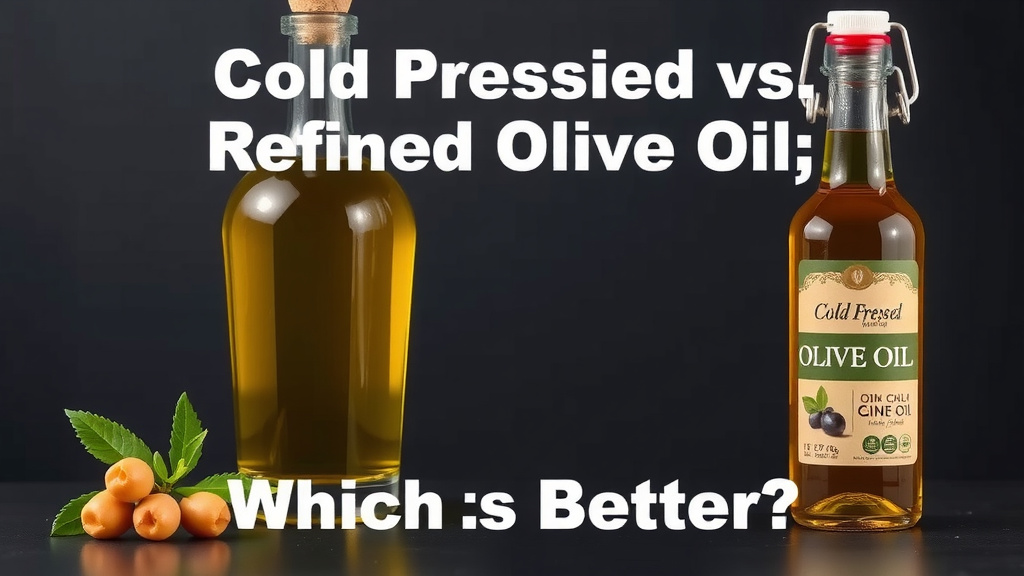
Cold Pressed vs Refined Olive Oil: Which Is Better
When comparing cold pressed vs refined olive oil, cold pressed is almost always the better choice for your health and taste buds. This is because cold pressed olive oil retains more beneficial nutrients and antioxidants. Refined olive oil often goes through more processing, which strips away some of its natural goodness and flavor.
Choosing the right olive oil can seem tricky with so many options. You want oil that’s not only delicious but also genuinely good for you. We’ve looked into the differences, and understanding the processing methods helps explain why one is often preferred over the other for everyday use and health benefits. It really comes down to how the oil is made.
- Cold pressed olive oil keeps more nutrients and flavor.
- Refined olive oil is processed more, losing some health benefits.
- Look for “extra virgin” for the highest quality cold pressed oil.
- Processing affects taste, color, and nutritional content.
- Your cooking and health goals should guide your choice.
Let’s break down exactly what makes these two types of olive oil different and what that means for your kitchen.
Understanding Olive Oil: Cold Pressed vs. Refined
Choosing the right olive oil can make a surprising difference in your cooking and your health. We often see labels like “extra virgin,” “virgin,” and “refined.” Have you ever wondered what all these terms really mean for the oil in your bottle? It all comes down to how the oil is produced. Let’s take a closer look at the main types you’ll find.
The Magic of Cold Pressing
Cold pressing is the traditional and often preferred method for producing high-quality olive oil. It’s like getting the purest essence of the olive. This process aims to preserve as much of the olive’s natural goodness as possible.
How Cold Pressing Works
Imagine gently squeezing olives to get their juice. That’s essentially what cold pressing does, but with special machinery. Olives are crushed into a paste. Then, this paste is spun or pressed to separate the oil from the water and solids. The key here is temperature. The temperature during this process is kept below a certain point. This ensures the delicate flavors and nutrients aren’t damaged by heat.
Temperature Matters
For olive oil to be called “cold pressed” or “cold extracted,” the processing temperature must stay below a specific threshold. Research indicates this limit is typically around 27 degrees Celsius (80.6 degrees Fahrenheit) (International Olive Council). When the temperature rises, some of the beneficial compounds can be lost.
What You Gain from Cold Pressing
This gentle method is fantastic for keeping healthy fats. It also preserves a rich array of antioxidants and polyphenols. These compounds are what give olive oil its amazing health benefits and robust flavor. You’re getting the direct taste of the olive with this method.
The “Extra Virgin” Distinction
When you see “extra virgin olive oil” on a label, it means you’re looking at the highest grade of cold-pressed oil. It’s the first pressing and has the lowest acidity. We found that “extra virgin” is a promise of quality and minimal processing.
The Process of Refining Olive Oil
Refining olive oil involves more steps than just pressing. It’s often done to make lower-quality oils more palatable or to create a neutral-tasting oil for wider use. Think of it as a way to “clean up” the oil.
What Does Refining Entail?
Refined olive oil starts with olives that might be lower quality, damaged, or even fermented. These oils may have defects that need fixing. The refining process uses heat and chemicals to remove impurities, undesirable flavors, and odors. This typically involves steps like degumming, neutralizing, bleaching, and deodorizing.
The Impact of Heat and Chemicals
While refining makes the oil stable and neutral, it comes at a cost. The heat and chemicals used can strip away much of the oil’s natural flavor. More importantly, they can significantly reduce the levels of beneficial antioxidants and polyphenols. You’re trading some of the health perks for a milder product.
Taste and Appearance Differences
Because of the processing, refined olive oil generally has a much lighter color. It also has a very neutral, almost bland flavor. This makes it versatile for cooking where you don’t want the olive oil taste to dominate. However, you lose that distinct olive fruitiness that many people love.
Key Differences at a Glance
Understanding the production methods helps clarify why these oils perform differently in your kitchen and for your well-being. Here’s a quick comparison to help you remember the main points.
| Feature | Cold Pressed Olive Oil (e.g., Extra Virgin) | Refined Olive Oil |
|---|---|---|
| Processing Method | Mechanical extraction, no heat or chemicals | Mechanical extraction followed by heat and/or chemical treatment |
| Temperature | Kept below 27°C (80.6°F) | Often involves high temperatures |
| Flavor & Aroma | Rich, fruity, peppery, distinct olive taste | Mild, neutral, little to no distinct flavor or aroma |
| Nutrients & Antioxidants | High levels of polyphenols, Vitamin E, and healthy fats | Significantly reduced levels of beneficial compounds |
| Acidity Level | Low (especially for Extra Virgin) | Adjusted to be low through processing |
| Color | Varies from green to golden yellow | Light yellow to pale gold |
| Best Uses | Salad dressings, finishing dishes, dipping, low-heat sautéing | High-heat cooking, baking, frying where a neutral flavor is desired |
Which Oil is Right for Your Needs?
So, when should you reach for one over the other? Your cooking style and what you hope to get from your olive oil are the deciding factors. Many health organizations recommend choosing less processed oils for their benefits.
For Health and Flavor: Reach for Cold Pressed
If you want the maximum health benefits and the best possible taste, cold-pressed olive oil, especially extra virgin, is your winner. Research consistently shows that the polyphenols in extra virgin olive oil contribute to heart health and have anti-inflammatory properties (NCBI). Use it for dishes where its flavor can shine. Think drizzling it over pasta, vegetables, or using it in a simple vinaigrette. For maximum health benefits and flavor, our guide to the best extra virgin olive oil is a great resource.
When Refined Olive Oil Makes Sense
Refined olive oil, often labeled simply as “olive oil” or “light olive oil,” has its place. Its higher smoke point makes it suitable for cooking methods that involve higher temperatures, like frying or roasting. If you’re baking a cake and don’t want an olive oil flavor, a refined version might be your choice. It’s also generally more affordable.
Making Your Choice: A Quick Checklist
Deciding between cold pressed and refined olive oil doesn’t have to be confusing. Keep these points in mind the next time you’re at the grocery store:
- Check the Label: Look for “Extra Virgin” or “Virgin” for cold-pressed.
- Consider Your Cooking: High heat? Refined might work. Flavor focus? Cold-pressed is better.
- Taste is Key: Do you want that distinct olive flavor? Go cold-pressed.
- Health Goals: For maximum antioxidants, choose cold-pressed.
- Price Point: Refined oils are often less expensive.
- Color & Clarity: Cold-pressed oils can have more variation in color and might have sediment.
Conclusion
You’ve learned that cold pressed olive oil is your top choice for flavor and health. Its minimal processing keeps beneficial nutrients and the true taste of olives intact. Refined olive oil serves a purpose, especially for high-heat cooking where a neutral flavor is needed. But for everyday health perks and deliciousness, you’ll want to reach for cold pressed, particularly extra virgin. Next time you shop, check those labels carefully. Your kitchen and your body will thank you for making the informed choice to embrace the goodness of cold pressed olive oil.
Frequently Asked Questions
What’s the main difference between cold pressed and refined olive oil for cooking?
Cold pressed olive oil, like extra virgin, is best for finishing dishes, dressings, or low-heat sautéing to preserve its flavor and nutrients. Refined olive oil is better suited for high-heat cooking like frying or roasting because it has a higher smoke point and a neutral taste.
Can I use cold pressed olive oil for frying?
While some cold pressed oils can be used for gentle frying, they have a lower smoke point than refined oils. For frequent high-heat frying, you might find refined or a blend labeled “olive oil” more stable and cost-effective. Always check the smoke point if you plan to fry with any olive oil.
Does cold pressed olive oil really taste better?
Yes, research indicates that cold pressing preserves the natural flavors and aromas of the olive. You’ll notice distinct fruity, peppery, or even grassy notes. Refined olive oil’s flavor is largely stripped away, making it very mild.
Are refined olive oils unhealthy compared to cold pressed?
Refined olive oils have fewer antioxidants and polyphenols due to the heat and chemical processing. While they are still a fat source, they don’t offer the same range of health benefits associated with the beneficial compounds found in cold pressed varieties.
How can I tell if my olive oil is cold pressed just by looking at it?
Look for terms like “Extra Virgin,” “Virgin,” or “Cold Pressed” on the label. These indicate minimal processing. Refined oils are often labeled simply as “Olive Oil” or “Light Olive Oil.” The color can vary, but it’s not a definitive indicator on its own.

![7 Best Olive Oil Brand For Hair [2026]](https://bestpureessentialoils.com/wp-content/uploads/2026/09/7-best-olive-oil-brand-for-hair-2026-featured-768x432.jpg)
![7 Best Extra Virgin Olive Oil To Eat Raw [2026]](https://bestpureessentialoils.com/wp-content/uploads/2026/08/7-best-extra-virgin-olive-oil-to-eat-raw-2026-featured-768x432.jpg)
![7 Best Italian Tuna In Olive Oil [2026]](https://bestpureessentialoils.com/wp-content/uploads/2026/08/7-best-italian-tuna-in-olive-oil-2026-featured-768x432.jpg)