Butter vs Olive Oil for Bread: Which Reigns Supreme
When it comes to butter vs. olive oil for your bread, olive oil often wins for a healthier choice. While butter offers a rich, creamy flavor, olive oil provides beneficial monounsaturated fats and a lighter taste that many find appealing for dipping. Both can make your bread delicious, but they offer different nutritional profiles and flavor experiences. You might be surprised by the subtle differences!
The debate between butter and olive oil for bread dipping is a common one in kitchens. Many home cooks wonder about the best way to enhance their favorite loaves. Olive oil is frequently recommended for its heart-healthy properties and distinct grassy or peppery notes. Butter, on the other hand, brings a familiar, comforting richness. Understanding these differences helps you choose what’s best for your meal and your taste buds.
- Olive oil is generally healthier due to monounsaturated fats.
- Butter offers a richer, creamier flavor profile.
- The choice depends on your health goals and taste preference.
- Consider extra virgin olive oil for the most flavor and benefits.
Let’s dive into the specifics of how butter and olive oil compare when it comes to your bread, so you can pick the perfect pairing for your next meal.
You’ve got your favorite crusty bread, perhaps a warm sourdough or a chewy focaccia. Now comes the big question: do you reach for the butter or the olive oil? It’s a delicious dilemma, and the answer really depends on what you’re hoping to get out of your bread experience. We’re going to break down the key differences to help you make the perfect choice every time.
Butter Versus Olive Oil: A Flavor and Nutrition Showdown for Your Bread
Both butter and olive oil are fantastic companions for bread. They add moisture and flavor. But when you look closer, their impacts on your taste buds and your body are quite different.
The Nutritional Profile: What Are You Actually Eating?
When you’re deciding between butter and olive oil, understanding their nutritional makeup is key. This can guide your choice based on your health goals.
Butter: The Saturated Fat Story
Butter is a dairy product, made from churning cream. It’s primarily composed of fat. A good portion of this fat is saturated fat. For example, one tablespoon of butter contains about 7 grams of saturated fat (U.S. Department of Agriculture FoodData Central). Current dietary guidelines suggest limiting saturated fat intake. This is because high consumption has been linked to an increased risk of heart disease (National Institutes of Health).
Olive Oil: The Monounsaturated Champion
Olive oil, especially extra virgin olive oil (EVOO), is celebrated for its health benefits. It’s rich in monounsaturated fats. These fats are considered heart-healthy. They can help lower bad cholesterol (LDL) and raise good cholesterol (HDL) (Mayo Clinic). EVOO also contains antioxidants like polyphenols. These compounds are thought to have anti-inflammatory properties (National Center for Complementary and Integrative Health). One tablespoon of olive oil has around 10 grams of monounsaturated fat and very little saturated fat.
Flavor and Texture: How They Feel on Your Palate
Beyond the health aspects, the taste and mouthfeel are huge factors. What kind of experience do you want with your bread?
Butter’s Rich Embrace
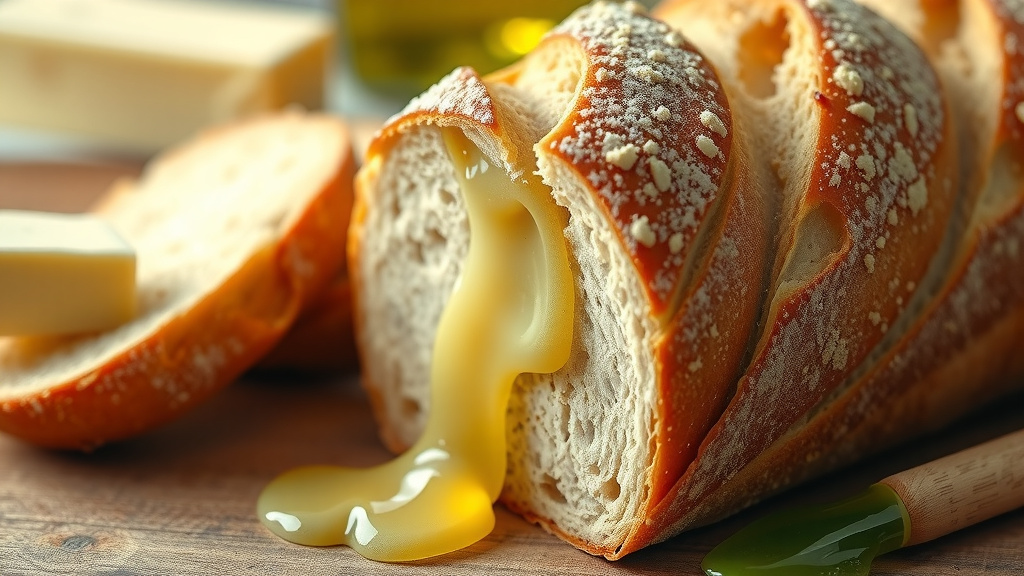
Butter brings a creamy, rich flavor to bread. It melts beautifully, coating the bread with a luxurious feel. The taste is familiar and comforting. It’s a classic for a reason. Many people enjoy the slight sweetness and the way it tames any bitterness in certain breads. It’s wonderful on a warm, crusty roll.
Olive Oil’s Zesty Kick
Olive oil offers a more complex flavor profile. High-quality extra virgin olive oil can be fruity, grassy, peppery, or even slightly bitter. These notes can complement a wide range of breads. Think of the Mediterranean way of dipping bread into good olive oil. It adds a vibrant dimension. The texture is lighter than butter, offering a smoother coating.
When to Choose Which: Pairing With Your Bread and Meal
So, when does butter shine, and when is olive oil the star? Consider the bread itself and the rest of your meal.
Butter’s Best Moments
Butter is often the go-to for comfort food. It pairs wonderfully with heartier breads like cornbread or a rustic white loaf. It’s also fantastic in baked goods or as a spread on toast. If you’re having a meal that feels a bit richer, butter can complement that. Think of it as adding a layer of indulgence.
Olive Oil’s Versatile Charm
Olive oil is incredibly versatile. It’s perfect for dipping breads like focaccia, ciabatta, or sourdough. Its lighter taste makes it ideal for meals where you don’t want to overpower other flavors. Many Italian and Greek dishes start with good olive oil. It can also be a great choice if you’re looking for a healthier alternative to butter for everyday use. Drizzling a bit of EVOO on a slice of whole-wheat bread is a simple, healthy treat.
Here’s a quick look at how they stack up:
| Feature | Butter | Olive Oil (Extra Virgin) |
|---|---|---|
| Primary Fat Type | Saturated Fat | Monounsaturated Fat |
| Flavor Profile | Rich, Creamy, Buttery | Fruity, Grassy, Peppery, Bitter |
| Texture | Smooth, Melts Easily | Lighter, Coats Well |
| Health Benefits | Limited (primarily energy source) | Heart-Healthy Fats, Antioxidants |
| Best For | Comfort foods, rich meals, baked goods | Dipping, lighter meals, Mediterranean flavors |
Making the Healthiest Choice for Your Daily Bread
If your main concern is health, olive oil is generally the preferred choice. The focus on monounsaturated fats and the presence of beneficial antioxidants in EVOO are big pluses. Many health organizations recommend using olive oil as a primary fat source (American Heart Association).
However, this doesn’t mean butter is entirely off the table. Moderation is key for any food. If you enjoy butter, using a smaller amount is perfectly fine, especially as part of a balanced diet.
Tips for Elevating Your Bread with Fat
Ready to make your bread even more delicious? Here are a few things to keep in mind:
- Always opt for high-quality extra virgin olive oil for the best flavor and health benefits.
- Don’t be afraid to experiment with different types of olive oil – they vary greatly!
- A pinch of sea salt can really make both butter and olive oil sing on your bread.
- Consider adding herbs or a touch of garlic to olive oil for a flavorful dip.
- Warm your bread slightly before adding butter or oil; it enhances the experience.
- If using butter, let it soften to room temperature for easier spreading.
Ultimately, the best fat for your bread is the one that brings you the most enjoyment and aligns with your dietary preferences. Both butter and olive oil have their unique strengths, and you can enjoy both!
Conclusion
So, you’ve learned that both butter and olive oil bring something special to your bread experience. Butter offers that familiar, rich comfort, perfect for cozy meals. Olive oil, especially extra virgin, provides heart-healthy fats and a brighter, more complex flavor that can truly liven up your bread. When you’re choosing, think about your health goals and the flavor profile you’re craving for that specific bread moment. For everyday dipping and a heart-smart choice, reach for quality olive oil. If you’re feeling like indulging, a touch of butter is always a classic delight. Go ahead and experiment to find your perfect pairing!
Frequently Asked Questions
Is olive oil truly healthier than butter for bread?
Yes, research consistently shows olive oil to be the healthier choice for your bread dipping. It’s rich in monounsaturated fats, which are good for your heart. Butter contains more saturated fat, which is best enjoyed in moderation.
Can I use any kind of olive oil for my bread?
For the best flavor and health benefits, opt for extra virgin olive oil (EVOO). EVOO has a more robust taste and retains more beneficial antioxidants compared to regular or light olive oils.
Does warming the bread before adding fat make a difference?
Absolutely! Warming your bread slightly helps it absorb the fat more effectively. For butter, it makes it melt beautifully, while for olive oil, it enhances the aroma and flavor distribution.
What if I want to add more flavor to olive oil for dipping?
You can easily create a flavorful olive oil dip! Try adding a pinch of sea salt, some fresh chopped herbs like rosemary or basil, or a tiny bit of minced garlic to your EVOO.
Is it okay to use both butter and olive oil with bread?
Of course! Many people enjoy using both depending on the occasion and the bread. You might use olive oil for a light lunch and butter for a special dinner or breakfast. Enjoying both in moderation is perfectly fine.


![7 Best Olive Oil Bar Soap [2026]](https://bestpureessentialoils.com/wp-content/uploads/2026/09/7-best-olive-oil-bar-soap-2026-featured-768x432.jpg)
![7 Best Extra Virgin Olive Oil For Health And Weight Loss [2026]](https://bestpureessentialoils.com/wp-content/uploads/2026/08/7-best-extra-virgin-olive-oil-for-health-and-weight-loss-2026-featured-768x432.jpg)