
Castor Oil vs Olive Oil for Eyebrows: Which is Best
When choosing between castor oil and olive oil for your eyebrows, castor oil is generally considered the better choice for promoting growth. This is because castor oil contains ricinoleic acid, a fatty acid that research suggests can stimulate hair follicles. Olive oil, while moisturizing, doesn’t offer the same direct growth-stimulating properties. Many users find castor oil leads to thicker, fuller-looking brows more effectively.
Both oils are natural emollients that can condition your brow hairs. Olive oil is rich in vitamins and antioxidants, which can help keep your existing brow hairs healthy and shiny. However, if your main goal is to encourage new growth and achieve denser brows, castor oil has shown more promise in studies and anecdotal evidence. Think of olive oil as a great conditioner, and castor oil as a potential growth booster for your eyebrows.
- Castor oil is often preferred for eyebrow growth.
- It contains ricinoleic acid, which may stimulate follicles.
- Olive oil is great for conditioning and shine.
- For encouraging thicker brows, castor oil is usually more effective.
Let’s dive deeper into why castor oil might be your new brow bestie and what makes olive oil a good secondary option.
Understanding Your Eyebrow Growth Options: Castor vs. Olive Oil
You’re looking for fuller, more defined eyebrows, and natural oils seem like the way to go. It’s a great instinct! Your eyebrows frame your face, and many people want to enhance their natural beauty. You’ve likely heard about both castor oil and olive oil. But which one is really the star player for eyebrow growth? Let’s break down what makes each oil unique for your brows.
Castor Oil: The Eyebrow Growth Powerhouse
When people talk about castor oil for eyebrows, it’s usually about **encouraging growth**. Research suggests a key ingredient in castor oil is responsible for this. This ingredient is called ricinoleic acid. It’s a fatty acid that makes up a large part of castor oil.
How Ricinoleic Acid Works for Hair Growth
Scientists believe ricinoleic acid can help **stimulate hair follicles**. Think of your hair follicles as tiny little factories under your skin. They’re responsible for growing hair. Ricinoleic acid might “wake up” these dormant follicles. It may also increase blood circulation to the scalp and skin. Better circulation means more nutrients can reach the follicles. This could lead to thicker, healthier hair growth over time (NCBI).
What the Science Says About Castor Oil and Hair
While much of the evidence for castor oil and hair growth is anecdotal, there have been studies. Some research shows that ricinoleic acid can bind to certain receptors on hair follicles. This binding action may **signal the follicles to enter the growth phase**. Other studies have found that castor oil can help reduce inflammation on the scalp, which is good for hair growth (NCBI).
User Experiences with Castor Oil for Brows
Across beauty blogs and forums, you’ll find countless stories from people who swear by castor oil. They often report seeing **noticeable differences in brow density and thickness** after consistent use. Many share before-and-after photos showing fuller arches. It’s a common theme: more hairs, longer hairs, and even darker hairs appear.
Olive Oil: The Deep Conditioner for Your Brows
Olive oil has been used for centuries for its **skin and hair benefits**. It’s packed with good stuff that can make your existing eyebrow hairs look and feel amazing. While it might not be the primary driver for *new* growth, it’s a fantastic supporter of overall brow health.
Nutrient-Rich Properties of Olive Oil
Olive oil is loaded with **vitamins and antioxidants**. You’ll find vitamins A and E, which are known for their skin-nourishing properties. Antioxidants help protect your skin and hair from damage. Think of them as tiny shields against environmental stress. This can help keep your brow hairs strong and less prone to breakage.
How Olive Oil Benefits Existing Brow Hairs
When you apply olive oil to your eyebrows, it acts as an excellent **emollient and conditioner**. It can penetrate the hair shaft, making each strand softer and more pliable. This reduces dryness and brittleness. Your brows will look shinier and feel smoother. If your brows are sparse because they are breaking off, olive oil can help strengthen them.
Olive Oil for Skin Health Around the Brows
The skin beneath your eyebrows also benefits from olive oil. It can help **moisturize dry skin**, which is important for healthy hair follicle function. A well-moisturized scalp (and brow area!) can create a better environment for hair to grow. Some research suggests olive oil has anti-inflammatory properties that could aid skin health (Cleveland Clinic).
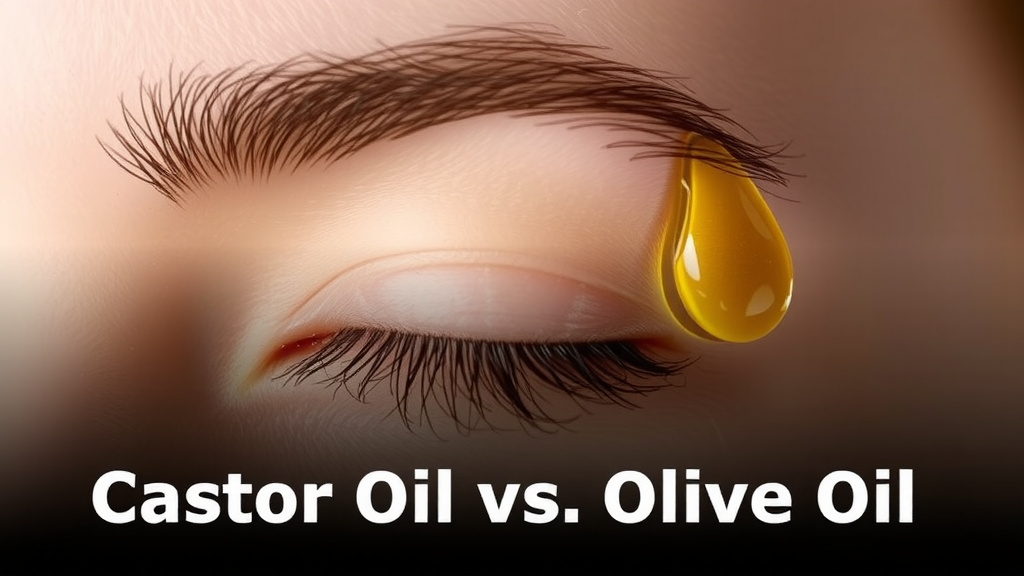
Castor Oil vs. Olive Oil: The Head-to-Head Comparison
So, you’ve got two excellent natural oils. But when it comes to your brow goals, how do they stack up? It really depends on what you’re trying to achieve.
| Feature | Castor Oil | Olive Oil |
|---|---|---|
| Primary Benefit for Brows | Promotes potential hair growth, increases density | Deeply conditions, adds shine, strengthens existing hairs |
| Key Ingredient | Ricinoleic acid | Oleic acid, Vitamins A & E, antioxidants |
| Mechanism | May stimulate hair follicles, increase circulation | Moisturizes hair shaft, nourishes skin, reduces breakage |
| Best For | Those seeking thicker, fuller-looking brows; encouraging new growth | Improving texture of existing brows; adding shine and softness; moisturizing dry skin |
| Potential Downsides | Can be thick and sticky; requires consistent use for best results | Less likely to stimulate significant new growth; can feel heavy if too much is used |
When to Choose Castor Oil
If your main mission is to achieve **thicker, more robust eyebrows**, castor oil is likely your winner. You’re hoping for new hairs to sprout and existing ones to get stronger. Castor oil’s ricinoleic acid is your best bet for targeting that follicle stimulation. It’s the choice for those who want to fill in sparse areas or create a bolder brow shape.
When to Choose Olive Oil
Perhaps your eyebrows are already reasonably full, but they look a bit **dry, frizzy, or dull**. In this case, olive oil shines. It’s perfect for anyone whose primary concern is the **health and appearance of their existing brow hairs**. It makes them feel softer, look glossier, and helps prevent breakage. It’s also a good option if you have dry skin around your brows.
Can You Use Both?
Absolutely! Many people find success using both oils, perhaps at different times or in combination. You could use castor oil a few nights a week to focus on growth. Then, use a tiny amount of olive oil on other nights or even during the day for conditioning and shine. This approach gives you the **best of both worlds**: potential growth stimulation and enhanced hair health.
Your Eyebrow Glow-Up Checklist
Ready to get started on your brow journey? Here’s a quick guide to help you decide and get the most out of your chosen oil:
- Identify Your Goal: Are you focusing on growth or conditioning?
- Choose Your Oil: Castor for growth, olive for conditioning, or both!
- Patch Test First: Always test a small area for sensitivity.
- Cleanse Your Brows: Apply oils to clean skin and hair.
- Use Sparingly: A little goes a long way with these potent oils.
- Be Consistent: Natural remedies take time for noticeable results.
Conclusion
You’ve learned that when it comes to boosting your brows, castor oil takes the lead for encouraging growth. Its special ingredient, ricinoleic acid, may help wake up those follicles. Olive oil, on the other hand, is your go-to for deep conditioning and shine, making your existing brow hairs healthier and stronger. Think of castor oil as your growth booster and olive oil as your brow conditioner. You can even use them together for the best of both worlds! Now, take that knowledge and start your brow transformation.
Frequently Asked Questions
How long does it take to see results with castor oil for eyebrows?
Consistency is key with natural remedies. You might start noticing subtle changes in your eyebrow density and thickness within 4-6 weeks of daily application. Keep up with it for a few months for more dramatic results.
Can I leave castor oil on my eyebrows overnight?
Yes, leaving castor oil on overnight is a popular and effective method for maximizing its benefits. Just be sure to use a small amount to avoid excessive oiliness on your pillowcase.
Is olive oil good for very sparse eyebrows?
While olive oil is excellent for conditioning and strengthening existing hairs, it’s not typically the primary choice for stimulating new growth in very sparse areas. Castor oil is generally recommended for sparse brows due to its potential follicle-stimulating properties.
What type of castor oil is best for eyebrows?
Look for 100% pure, cold-pressed castor oil, preferably hexane-free. This type retains the most beneficial compounds, like ricinoleic acid, for your hair and skin.
Can I use both castor oil and olive oil on the same night?
You can alternate between the two oils on different nights, or use a tiny amount of olive oil after your castor oil treatment has had time to absorb. Applying them too closely might dilute their individual benefits.

![7 Best Extra Virgin Olive Oil Recommendations 2025 [2026]](https://bestpureessentialoils.com/wp-content/uploads/2026/08/7-best-extra-virgin-olive-oil-recommendations-2025-2026-featured-768x432.jpg)