Coconut Oil vs Olive Oil: Nutrition Facts Compared
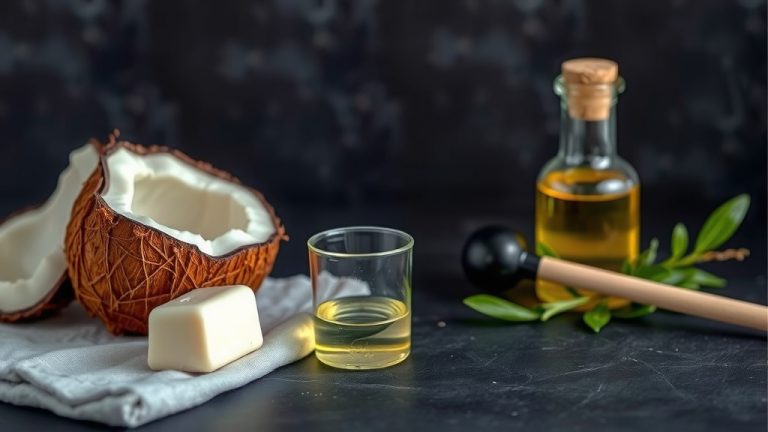
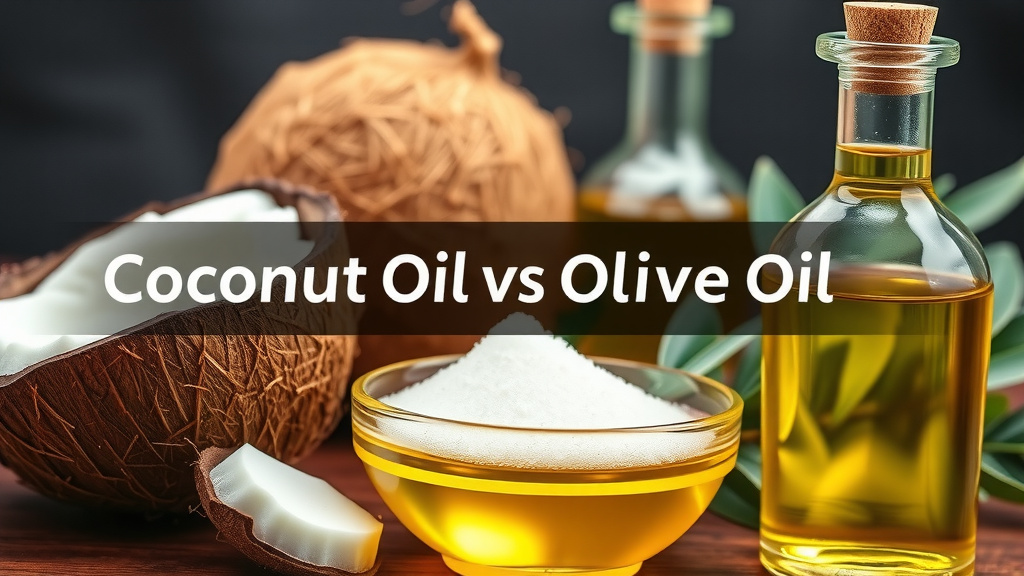
When comparing coconut oil vs. olive oil, olive oil is generally considered healthier for everyday cooking. Olive oil offers a better fat profile with more monounsaturated fats. Coconut oil is high in saturated fats, though of a specific type called MCTs.
Both oils have distinct nutritional benefits and uses in your kitchen. Understanding their fatty acid breakdown helps you choose the right oil for your needs. We found that their smoke points also differ, affecting how they perform when heated.
- Olive oil is richer in heart-healthy monounsaturated fats.
- Coconut oil contains more saturated fats, including beneficial MCTs.
- Olive oil generally has a lower smoke point than coconut oil.
- Choose olive oil for dressings and low-heat cooking.
- Coconut oil can be good for certain high-heat cooking methods.
Let’s break down the nutritional facts and cooking properties of coconut oil versus olive oil so you can make the best choice for your meals.
“`htmlNutritional Breakdown: Coconut Oil vs. Olive Oil
When you’re standing in the grocery aisle, trying to pick the best oil for your cooking, it can feel a little overwhelming. You want to make a healthy choice, right? We’ve looked into the nutritional facts of coconut oil and olive oil. It turns out they are quite different, especially when it comes to their fat content. Understanding these differences can help you decide which one fits best into your diet and cooking style.
Fatty Acid Profiles: A Closer Look
Both oils are primarily made of fats, but the *types* of fats are where they really diverge. This is the key to understanding their health impacts. We found that the main players are saturated fats, monounsaturated fats, and polyunsaturated fats.
Saturated Fats: The Coconut Oil Strength
Coconut oil is famous for being high in saturated fat. We’re talking about around 80-90% saturated fat! But here’s a twist: a good portion of these are Medium-Chain Triglycerides, or MCTs. Your body processes MCTs differently than other fats. They are absorbed more quickly and can be used for energy. Some research suggests MCTs may have other benefits, but more studies are needed (Harvard Health).
Olive oil, on the other hand, has much less saturated fat, typically around 15% or less. So, if you’re watching your saturated fat intake, this is a big point to consider.
Monounsaturated Fats: Olive Oil’s Star Player
This is where olive oil really shines. It’s packed with monounsaturated fats, making up about 70-80% of its fat content. Oleic acid is the main type of monounsaturated fat found in olive oil. These fats are often called “heart-healthy” fats. Many health organizations recommend increasing your intake of monounsaturated fats. They can help improve cholesterol levels, which is good news for your heart (Mayo Clinic).
Coconut oil has very little monounsaturated fat, usually only around 5-10%.
Polyunsaturated Fats: A Supporting Role
Both oils contain some polyunsaturated fats, but in smaller amounts compared to the other types. These include omega-3 and omega-6 fatty acids. Olive oil generally has a bit more polyunsaturated fat than coconut oil. While these fats are essential, most people get enough omega-6 from their diet already. The balance between omega-3 and omega-6 is important for health.
Key Nutritional Differences at a Glance
Let’s break down the numbers per tablespoon. This gives you a clear picture of what you’re consuming.
| Nutrient (per 1 tbsp) | Coconut Oil (Refined) | Extra Virgin Olive Oil |
|---|---|---|
| Calories | 120 | 120 |
| Total Fat | 14g | 14g |
| Saturated Fat | 12g | 2g |
| Monounsaturated Fat | 1g | 10g |
| Polyunsaturated Fat | 0.5g | 1.5g |
| Vitamin E | 0mg | 2mg (approx. 2% DV) |
As you can see, the **saturated fat content** is the most striking difference. Extra virgin olive oil is a champion for **monounsaturated fats**. Both oils have the same calorie count, which is expected since fat is calorie-dense.
Cooking Properties: Smoke Points and Uses
Beyond nutrition, how these oils behave when heated is super important for cooking. Ever notice a smoky smell or taste when you’re frying? That’s often related to the oil’s smoke point.
Understanding Smoke Points
The smoke point is the temperature at which an oil starts to break down and produce smoke. When oil smokes, it can form harmful compounds and lose its flavor. Different processing methods affect an oil’s smoke point.
Coconut Oil’s High Heat Tolerance
Refined coconut oil generally has a higher smoke point, often around 400-450°F (204-232°C). This makes it a good choice for high-heat cooking methods like frying, sautéing, and baking. Virgin or unrefined coconut oil has a lower smoke point, typically around 350°F (177°C). So, if you’re using coconut oil for intense heat, opt for the refined version.
Olive Oil’s Delicate Nature
Extra virgin olive oil (EVOO) has a lower smoke point, usually between 375-410°F (190-210°C). Virgin olive oil has a similar range. While this is lower than refined coconut oil, it’s still suitable for many cooking tasks. We found that for everyday cooking like pan-searing or roasting vegetables, EVOO is perfectly fine.
However, for very high-heat searing or deep-frying, its smoke point might be reached more easily. In these cases, a more refined oil like regular olive oil (not extra virgin) or even a blend might be a better choice. Regular olive oil, which is more processed, has a higher smoke point than EVOO.
Choosing the Right Oil for Your Meal
So, how do you decide? Think about what you’re making.
- For salad dressings, marinades, or finishing dishes, extra virgin olive oil is fantastic. Its flavor adds a wonderful richness.
- For sautéing vegetables or cooking eggs at medium heat, both can work, but olive oil’s flavor is often preferred for these.
- For high-heat searing or stir-frying, refined coconut oil is a solid option due to its higher smoke point.
- When baking, especially if a recipe calls for a specific flavor, coconut oil can add a subtle tropical note.
It’s not about one being “bad” and the other “good.” It’s about understanding their unique properties. You might even find yourself reaching for both!
Quick Guide for Your Kitchen:
- Use Extra Virgin Olive Oil for: Dressings, dipping bread, finishing pasta.
- Use Refined Coconut Oil for: High-heat frying, baking, stir-fries.
- Consider Your Health Goals: If you’re focused on monounsaturated fats, olive oil is your friend.
- Watch for Flavor: Coconut oil adds a distinct taste. Olive oil adds a fruity or peppery note.
- Storage Matters: Keep oils away from heat and light to maintain freshness.
Conclusion
You’ve learned that while both coconut oil and olive oil can fit into your kitchen, they serve different purposes. Olive oil, rich in heart-healthy monounsaturated fats, is your go-to for dressings and lower-heat cooking. Coconut oil, with its higher saturated fat content (including beneficial MCTs), is better suited for high-heat cooking due to its higher smoke point. Understanding their unique fatty acid profiles and cooking properties empowers you to make informed choices for your meals. Next time you’re cooking, consider which oil best matches your recipe and health goals.
Frequently Asked Questions
Is coconut oil unhealthy because it’s high in saturated fat?
While coconut oil is high in saturated fat, a significant portion is in the form of Medium-Chain Triglycerides (MCTs). Your body processes MCTs differently, using them more readily for energy. Research suggests potential benefits, but the overall impact on health is still debated, and moderation is key, as with all fats.
Can I use extra virgin olive oil for high-heat frying?
Extra virgin olive oil has a lower smoke point compared to refined coconut oil or regular olive oil. While it can handle moderate heat for sautéing and roasting, very high-heat frying or searing might cause it to smoke and break down. For these intense cooking methods, a more refined oil is generally recommended.
What are MCTs in coconut oil?
MCTs stand for Medium-Chain Triglycerides, which are a type of saturated fat found in coconut oil. They are shorter in length than long-chain fatty acids, allowing them to be absorbed more quickly by your body and go directly to the liver for energy. This unique characteristic sets them apart from other saturated fats.
Which oil is better for weight loss, coconut oil or olive oil?
Some studies suggest MCTs in coconut oil may support metabolism and satiety, potentially aiding weight management. However, both oils are calorie-dense, and consuming too much of either can lead to weight gain. A balanced diet is more critical for weight loss than relying on one specific oil.
Do I need to avoid olive oil if I have high cholesterol?
Olive oil, especially extra virgin olive oil, is rich in monounsaturated fats which are known to help improve cholesterol profiles by lowering LDL (“bad”) cholesterol and potentially raising HDL (“good”) cholesterol. It is generally considered a heart-healthy choice for many individuals, including those managing cholesterol.