
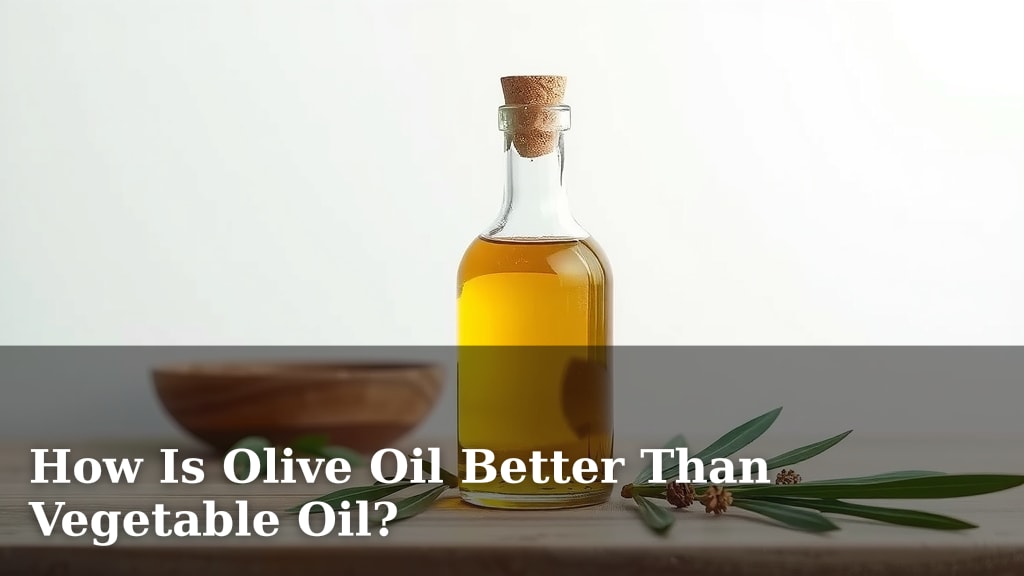
How Is Olive Oil Better Than Vegetable Oil?
When comparing cooking oils, olive oil is generally a healthier choice than vegetable oil. This is primarily because olive oil contains more monounsaturated fats and beneficial antioxidants. Vegetable oils, often a blend of oils like corn, soybean, and sunflower, can be more processed and contain higher amounts of omega-6 fatty acids.
You might be wondering about the differences in everyday cooking. Many people choose vegetable oil for its higher smoke point and neutral flavor. However, research suggests that the unique compounds found in olive oil offer distinct health advantages. We found that understanding these differences can help you make smarter choices for your kitchen.
- Olive oil is richer in monounsaturated fats and antioxidants.
- Vegetable oils can be more processed and higher in omega-6s.
- Olive oil offers unique health benefits.
- Choose based on your cooking needs and health goals.
Let’s dive into why olive oil often takes the crown and how it stacks up against common vegetable oils for your cooking and health.
Why Olive Oil Shines Brighter Than Many Vegetable Oils
You might be curious about the health differences between olive oil and your go-to vegetable oil. We found that olive oil often comes out on top due to its nutritional profile. It’s packed with beneficial compounds that vegetable oils typically lack. Let’s break down why this is the case.
Understanding the Fat Content: Monounsaturated vs. Polyunsaturated
The main story of olive oil versus vegetable oil often comes down to the types of fats they contain. This is where you’ll see the biggest health distinctions.
The Power of Monounsaturated Fats (MUFAs)
Olive oil, especially extra virgin olive oil, is a champion of monounsaturated fats. These fats are known for their heart-healthy properties. We found research linking MUFAs to improved cholesterol levels. They can help lower your LDL (bad) cholesterol while potentially raising HDL (good) cholesterol (Harvard Health Publishing).
Think of MUFAs as the friendly guardians of your cardiovascular system. They are stable fats that your body can use effectively. This makes olive oil a great choice for everyday cooking and dressings.
The Role of Polyunsaturated Fats (PUFAs) and Omega-6
Many common vegetable oils, like soybean and corn oil, are high in polyunsaturated fats. These include omega-3 and omega-6 fatty acids. While both are essential, the balance between them is key.
We found that most Western diets tend to have too much omega-6 relative to omega-3. An imbalance favoring omega-6 can contribute to inflammation in the body. Vegetable oils, due to their processing, often carry a higher omega-6 load. This is a key reason why olive oil is often preferred.
Antioxidants: Olive Oil’s Secret Weapon
Beyond fats, olive oil is rich in antioxidants. These compounds act like tiny protectors for your cells. They fight off damage caused by free radicals, which are unstable molecules linked to aging and chronic diseases.
The Richness of Extra Virgin Olive Oil (EVOO)
Extra virgin olive oil is particularly loaded with polyphenols. These are powerful antioxidants that give EVOO its distinct flavor and aroma. We found that these polyphenols have anti-inflammatory properties as well (NCBI).
The way EVOO is produced — cold-pressed without harsh chemicals — helps preserve these precious antioxidants. This is a stark contrast to the highly refined nature of many vegetable oils.
What About Antioxidants in Vegetable Oils?
While some vegetable oils might contain trace amounts of antioxidants, they are generally much lower than in EVOO. The refining process used to make vegetable oils often strips away these beneficial compounds. You’re often left with a fat that is less supportive of your overall health.
Processing: The Less, The Better
The way oils are made significantly impacts their healthfulness. You’ll notice a big difference here.
Minimal Processing for Olive Oil
High-quality olive oils, especially extra virgin, undergo minimal processing. They are typically just pressed from olives. This means fewer chemicals are used, and more natural nutrients are retained.
We found that this natural extraction method is what makes EVOO so pure and beneficial. It’s practically olive juice, rich in vitamins and healthy fats.
The Refining of Vegetable Oils
Most vegetable oils on the market are highly refined. This involves processes like bleaching and deodorizing to create a neutral flavor and a long shelf life. While this makes them versatile for cooking, it can also diminish their nutritional value.
Some experts suggest that these refining processes can create less desirable compounds in the oil. This is another reason why many opt for less processed options like olive oil.
Smoke Point and Cooking Applications
When you cook, the oil’s smoke point matters. This is the temperature at which the oil starts to burn and smoke.
Olive Oil’s Smoke Point Versatility
Extra virgin olive oil has a smoke point around 375-400°F (190-205°C). This is suitable for most everyday cooking, including sautéing and baking. You might find that refined olive oils have even higher smoke points.
We found that for typical home cooking, EVOO is perfectly capable. You don’t always need a super-high smoke point unless you’re deep-frying regularly.
Vegetable Oils and High Heat
Many vegetable oils have higher smoke points, making them seem like a better choice for high-heat cooking. Oils like canola, sunflower, or grapeseed oil can withstand hotter temperatures before smoking.
However, even with a higher smoke point, the fatty acid profile of some vegetable oils can become unstable at high heat. This can lead to the formation of undesirable compounds. So, while they might not smoke, they might not be the healthiest option under extreme heat.
Comparing Nutritional Profiles at a Glance
Let’s look at how these oils stack up in a simple comparison.
| Characteristic | Extra Virgin Olive Oil (EVOO) | Common Vegetable Oils (e.g., Soy, Corn) |
|---|---|---|
| Primary Fat Type | Monounsaturated Fats (MUFAs) | Polyunsaturated Fats (PUFAs) – Higher Omega-6 |
| Antioxidant Content | High (Polyphenols) | Low to Moderate (often lost in processing) |
| Processing Level | Minimal (cold-pressed) | High (refined, bleached, deodorized) |
| Omega-3 Content | Very Low | Variable, often low |
| Omega-6 Content | Low | High |
| Health Benefits | Heart health, anti-inflammatory | Can contribute to inflammation if balance is off |
Making the Smart Choice for Your Kitchen and Health
So, how do you decide? Your cooking habits and health goals are the biggest factors.
If you’re looking for an oil that supports heart health and provides a good dose of antioxidants, olive oil is a fantastic choice. It’s perfect for dressings, finishing dishes, sautéing, and even roasting.
For very high-heat searing or deep frying, you might consider other oils. However, for most everyday uses, olive oil offers a healthier and more flavorful option.
Quick Checklist for Healthier Oil Choices
Here’s a simple way to remember the key differences:
- Prioritize monounsaturated fats.
- Look for oils rich in antioxidants.
- Choose less processed oils when possible.
- Be mindful of the omega-6 to omega-3 ratio.
- Consider the smoke point for your specific cooking needs.
- When in doubt, reach for extra virgin olive oil.
Conclusion
You’ve seen how olive oil generally holds the edge over many common vegetable oils, especially for your health. Its heart-healthy monounsaturated fats and powerful antioxidants, particularly in extra virgin varieties, offer distinct benefits. We found that the minimal processing of olive oil preserves its natural goodness, unlike the more refined vegetable oils that can be high in omega-6s. For your everyday cooking, from dressings to sautéing, choosing olive oil is a smart step toward a healthier diet. So, next time you reach for a cooking oil, consider the benefits and pick the one that best supports your well-being.
Frequently Asked Questions
Can I really use extra virgin olive oil for all my cooking?
Yes, for most everyday cooking methods like sautéing, roasting, and baking, extra virgin olive oil is a great choice. Its smoke point is high enough for these tasks, and you benefit from its full flavor and nutrients. You might choose a more refined olive oil or another oil for very high-heat frying.
Are all vegetable oils bad for you then?
Not necessarily bad, but their health profile differs. Many vegetable oils are high in polyunsaturated fats, specifically omega-6s. While your body needs omega-6, an imbalance with too much omega-6 and too little omega-3 can lead to inflammation. It’s about balance and the degree of processing.
What’s the main difference I should remember about olive oil vs. vegetable oil?
The key differences lie in their fat composition and processing. Olive oil is rich in heart-healthy monounsaturated fats and beneficial antioxidants due to minimal processing. Many vegetable oils are more highly processed and contain higher amounts of omega-6 fatty acids, which can be inflammatory if not balanced.
Does the type of olive oil matter for health benefits?
Yes, extra virgin olive oil (EVOO) generally offers the most health benefits. It’s the least processed form, meaning it retains the highest levels of beneficial antioxidants like polyphenols. Look for “extra virgin” on the label for the greatest advantage.
When might a vegetable oil be a better choice than olive oil?
Vegetable oils like canola or sunflower oil often have higher smoke points and a more neutral flavor. You might opt for these if you are doing a lot of high-heat, deep frying where smoke point is critical and you prefer a neutral taste profile without olive oil’s distinct flavor.

![7 Best European Olive Oil [2026]](https://bestpureessentialoils.com/wp-content/uploads/2026/07/7-best-european-olive-oil-2026-featured-768x432.jpg)
![7 Best Virgin Olive Oil [2026]](https://bestpureessentialoils.com/wp-content/uploads/2026/07/7-best-virgin-olive-oil-2026-featured-768x432.jpg)
![7 Best Cold Pressed Olive Oil For Health [2026]](https://bestpureessentialoils.com/wp-content/uploads/2026/06/7-best-cold-pressed-olive-oil-for-health-2026-featured-768x432.jpg)