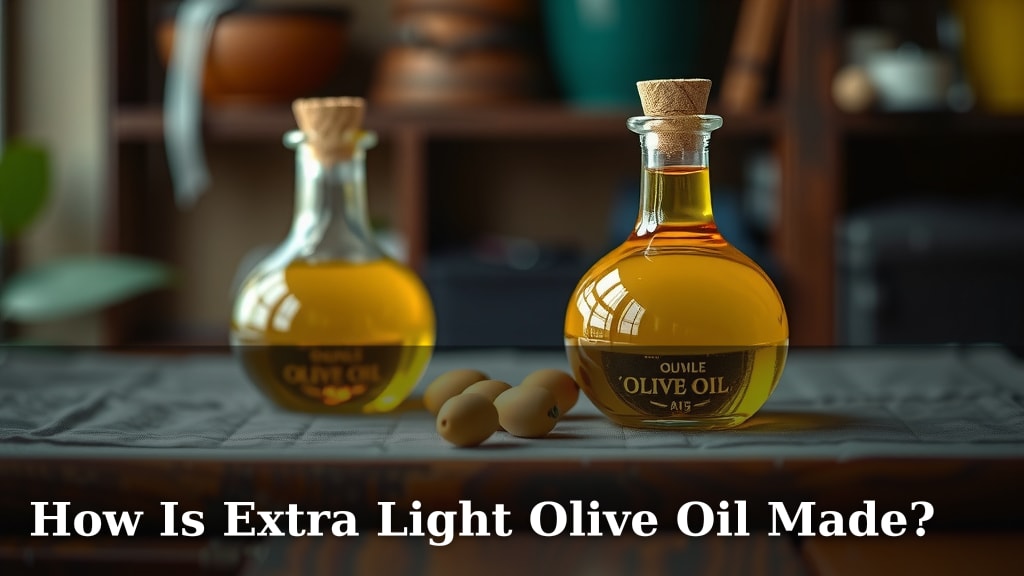
How Is Extra Light Olive Oil Made?
Extra light olive oil is made through a process that refines regular olive oil. This means it undergoes more filtering and uses heat. The goal is to remove most of its natural color and flavor. This results in a very neutral-tasting oil with a higher smoke point.
You might be wondering if it’s still “good” olive oil. While it’s not “extra virgin,” it still comes from olives. The refining process strips away some of the beneficial compounds. However, for certain cooking applications, its neutral profile and higher smoke point make it a practical choice. Many people are curious about the difference.
- Extra light olive oil is a refined olive oil.
- It’s made by filtering and heating regular olive oil.
- This process removes most of its color and flavor.
- It has a neutral taste and a higher smoke point.
- It’s different from extra virgin olive oil.
Let’s walk through exactly how this happens step by step, so you can understand what’s in your pantry.
The Process Behind Extra Light Olive Oil
Extra light olive oil might sound fancy, but its creation involves more than just pressing olives. It’s essentially a refined olive oil. This means it undergoes a series of treatments to alter its original qualities. The goal is to create a very mild, neutral oil suitable for specific cooking needs.
From Olive to Refined Oil: A Transformation
So, how does a flavorful, green olive oil become something so neutral? It starts with regular olive oil, often the lower grades like “lampante” oil. This is oil that wouldn’t typically be sold as extra virgin or virgin. Instead of being discarded, it’s sent for refining.
Step 1: Neutralization
The first step in refining olive oil is neutralization. This process aims to remove free fatty acids. These acids can contribute to a less desirable taste and smell. Heat and a small amount of alkaline solution are used. This reaction converts the free fatty acids into salts, which are then washed away. This step helps make the oil more stable.
Step 2: Bleaching
After neutralization, the oil might still have a color. To remove this, the oil goes through a bleaching process. Activated carbon or clay-like earth is used. These materials absorb the pigments that give olive oil its color. This is a standard procedure for many refined vegetable oils. It ensures the final product has a very pale, almost clear appearance.
Step 3: Deodorization
This is a key step for achieving that “light” flavor profile. Deodorization involves using high temperatures and steam. The steam strips away volatile compounds. These compounds are what give olive oil its characteristic aroma and taste. Temperatures can reach over 200°C (392°F). This process effectively removes nearly all the natural olive scent and flavor. It leaves behind a very bland oil.
Step 4: Winterization (Sometimes Used)
Some refined olive oils might also undergo winterization. This process involves chilling the oil. It causes certain fats to crystallize. These solid fats are then filtered out. The goal is to prevent the oil from becoming cloudy when refrigerated. This is less about flavor and more about appearance, especially in colder conditions.
What’s Left After Refining?
The refining process is quite thorough. It strips away not only color and flavor but also some beneficial compounds. Extra virgin olive oil is praised for its antioxidants and polyphenols. These are the compounds that give it its robust flavor and health benefits. Unfortunately, the high heat and treatments used in refining can reduce the levels of these nutrients.
Comparison: Extra Light vs. Extra Virgin
It’s helpful to see how extra light stacks up against its more famous cousin. Here’s a quick look:
| Characteristic | Extra Light Olive Oil | Extra Virgin Olive Oil |
|---|---|---|
| Flavor | Neutral, mild | Fruity, peppery, sometimes bitter |
| Color | Pale yellow to clear | Green to golden yellow |
| Smoke Point | Higher (around 400-470°F / 204-243°C) | Lower to medium (around 325-375°F / 163-190°C) |
| Nutrients (Polyphenols, Antioxidants) | Significantly reduced | High |
| Production Method | Refined, filtered, heat-treated | Mechanical extraction only, unrefined |
Why Choose Extra Light Olive Oil?
Given the changes, why would you reach for extra light olive oil? It really comes down to your cooking needs. Its neutral taste means it won’t interfere with the flavors of your dish. You know, those delicate herbs or spices you’re using? Extra light oil lets them shine. It’s like the quiet background actor that supports the stars of the show.
Also, its higher smoke point is a big advantage. For high-heat cooking like deep-frying or searing, you need an oil that can handle the temperature. Using an oil with a lower smoke point can cause it to break down. This can create unpleasant flavors and potentially harmful compounds. Extra light olive oil is a reliable choice for these tasks. Many home cooks find it a good all-purpose oil for baking too.

Is It Still “Olive Oil”?
Yes, it is still considered olive oil. The U.S. Food and Drug Administration (FDA) has standards for olive oil. Extra light olive oil meets these standards. It is made from olives, and the refining process allows it to be labeled as olive oil. However, it’s important to remember it’s a different category than extra virgin. Think of it as a distant cousin rather than a twin.
Key Takeaways for Your Kitchen
To sum up what you’ve learned, here’s a quick checklist:
- Extra light olive oil is refined olive oil.
- Refining involves neutralization, bleaching, and deodorization.
- These steps remove color, flavor, and many nutrients.
- It has a neutral taste and a higher smoke point.
- It’s ideal for high-heat cooking and baking where mildness is key.
- It’s different from extra virgin, which is unrefined and retains more flavor and nutrients.
Conclusion
You’ve learned that extra light olive oil is a refined product. It starts as regular olive oil and undergoes heating and filtering. This process creates a neutral-tasting oil with a high smoke point. While it lacks the robust flavor and antioxidants of extra virgin olive oil, its properties make it ideal for specific cooking tasks. Now that you understand its creation, you can confidently choose it for your high-heat searing, frying, or baking needs.
Frequently Asked Questions
Is extra light olive oil healthy?
Extra light olive oil is still a source of healthy fats. However, the refining process reduces its beneficial antioxidants and polyphenols. For maximum health benefits, extra virgin olive oil is generally preferred. Yet, for specific cooking methods, extra light olive oil is a perfectly fine choice.
Can I use extra light olive oil for salad dressing?
While you could use extra light olive oil for salad dressing, it’s not typically recommended. Its neutral flavor won’t add the fruity or peppery notes that complement dressings. You’ll get a much better flavor profile using extra virgin olive oil for your vinaigrettes.
Does extra light olive oil have any olive flavor left?
The deodorization process used to make extra light olive oil removes almost all natural aromas and flavors. This is intentional to create a neutral product. So, you won’t taste much, if any, of the original olive flavor in extra light olive oil.
Is extra light olive oil considered pure olive oil?
Yes, extra light olive oil is still considered olive oil. It is made from olives and meets U.S. Food and Drug Administration standards for olive oil. The key difference is that it has been refined, unlike extra virgin olive oil, which is unrefined.
What’s the main reason to use extra light olive oil over extra virgin?
The primary reasons to choose extra light olive oil are its neutral flavor and higher smoke point. Its mildness won’t overpower delicate ingredients in recipes. The higher smoke point makes it a safer and more effective choice for cooking methods that require high temperatures.

![7 Best Italian Olive Oil Gift Set [2026]](https://bestpureessentialoils.com/wp-content/uploads/2026/08/7-best-italian-olive-oil-gift-set-2026-featured-768x432.jpg)