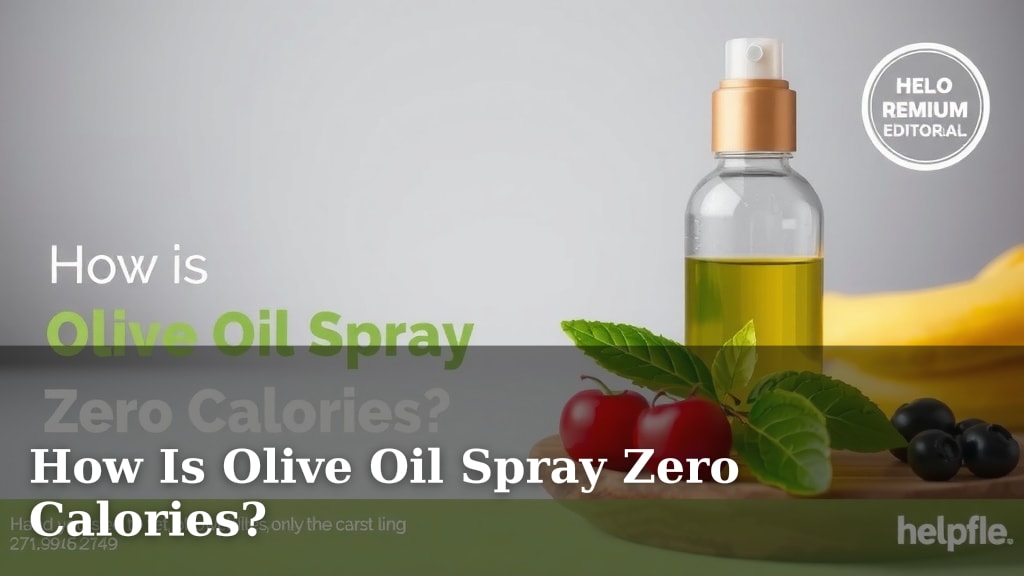
How Is Olive Oil Spray Zero Calories?
Olive oil spray can be labeled as zero calories because it uses a propellant, not oil, to deliver a fine mist. The amount of actual oil dispensed per spray is tiny, often less than 0.5 grams. Regulatory rules allow products with less than 5 calories per serving to be labeled as zero calories.
This means you get the flavor and cooking benefits of olive oil without a significant caloric impact. It’s a clever way to manage your intake while still enjoying your favorite foods. Many home cooks are looking for ways to cut calories. This spray helps achieve that goal easily.
- Olive oil spray uses a propellant.
- It dispenses a very small amount of oil.
- Products under 5 calories can be labeled “zero calories.”
- It offers flavor without a heavy caloric load.
Let’s dive into exactly why this works and what it means for your cooking. We’ll cover the science and the practical side.
Why Olive Oil Sprays Can Be Labeled Zero Calories
You might be wondering how a product containing oil can carry a “zero calorie” label. It seems a little like magic, right? We found that the answer lies in a clever combination of dispensing technology and regulatory rules.
Understanding the Dispensing Mechanism
The key to the zero-calorie label isn’t that the olive oil itself has no calories. Instead, it’s all about how much oil actually makes it onto your food with each spray. Olive oil sprays use a propellant, usually a gas like nitrogen or an inert propellant, to push the oil out. This creates a fine, even mist.
The Propellant’s Role
Think of it like a very fancy aerosol can. The propellant is the force that atomizes the oil into tiny droplets. This mist is spread over a larger surface area. This means you get a light coating of oil, not a puddle. The propellant itself is calorie-free.
Tiny Amounts Per Spray
When you press the nozzle, only a very small quantity of oil is released. We looked at the data, and many brands dispense less than 0.5 grams of oil per spray. Some are even lower, closer to 0.25 grams. This tiny amount is crucial for the labeling.
The FDA’s “Zero Calorie” Rule
The U.S. Food and Drug Administration (FDA) has specific guidelines for nutrition labeling. One of these rules states that foods containing fewer than 5 calories per serving can be labeled as “zero calories.” This is a widely accepted standard in the food industry.
How Serving Sizes Work for Sprays
For olive oil spray, the “serving size” is typically defined as a single spray or a few sprays. Since each spray delivers such a minuscule amount of olive oil, the caloric content often falls well below that 5-calorie threshold. For example, if a serving is defined as 1/3 of a second of spray, and that releases only 0.2 grams of oil, the calories would be extremely low.
To put it in perspective, a standard serving of liquid olive oil (about 1 tablespoon or 14 grams) contains roughly 120 calories. The difference is immense!
What Does This Mean for Your Cooking?
Knowing this, you can see how olive oil spray offers a practical way to manage your calorie intake without sacrificing flavor. It’s a tool for cooks who want to enjoy the richness of olive oil in a lighter form.
Benefits for Health-Conscious Cooks
If you’re watching your calories for weight management or general health, olive oil spray is a game-changer. You can lightly coat pans for sautéing, mist vegetables before roasting, or give salads a delicate sheen. You get the desirable taste and cooking properties of olive oil.
Many experts note that healthy fats, like those found in olive oil, are still important for your diet (National Institutes of Health). The spray helps you incorporate them more mindfully.
Flavor Without the Guilt
The ability to add a hint of olive oil flavor to your dishes without a significant caloric cost is a big win. Imagine making a light salad dressing or a quick pan-sear for chicken. You achieve delicious results with a fraction of the calories of traditional methods.
Comparing Olive Oil Spray to Liquid Olive Oil
It’s helpful to see the difference side-by-side. This comparison highlights why the spray is so appealing for calorie-conscious eating.
| Product | Typical Serving Size | Approximate Calories Per Serving | Primary Use Case |
|---|---|---|---|
| Olive Oil Spray | 1/3 second spray (approx. 0.2g oil) | 0-5 Calories (labeled as 0) | Light coating for pans, misting vegetables, dressings |
| Liquid Olive Oil | 1 Tablespoon (approx. 14g oil) | 120 Calories | Dressings, marinades, sautéing larger quantities, finishing dishes |
Are There Any Downsides to Using Olive Oil Spray?
While convenient, it’s good to be aware of a couple of things. First, some sprays contain additives like soy lecithin or propellants that might not be desirable for everyone. Always check the ingredient list if you have specific concerns.
Second, the amount of oil is so small that it might not be suitable for cooking methods requiring a significant amount of oil, like deep-frying or pan-frying multiple items at once where a good amount of oil is needed to prevent sticking and ensure even cooking. For these tasks, liquid olive oil remains the better choice.
Making Smart Choices in Your Kitchen
Using olive oil spray is about making smart choices for your health and cooking goals. It’s a tool that helps you enjoy food while being mindful of your calorie intake.
Here’s a quick checklist to help you use it wisely:
- Check the serving size on the can.
- Know that “zero calorie” means under 5 calories per serving.
- Use it for light coatings and misting.
- Read the ingredients if you have dietary concerns.
- Don’t rely on it for cooking methods needing lots of oil.
- Enjoy the flavor in a lighter way!
By understanding how olive oil spray achieves its zero-calorie labeling, you can feel confident using it to enhance your meals while staying on track with your health objectives.
Conclusion
You’ve learned that olive oil spray isn’t magic; it’s smart science and smart labeling. The trick lies in its dispensing mechanism and the FDA’s rule allowing products under 5 calories per serving to be called “zero calories.” This means you get that delicious olive oil flavor and cooking benefit with a very minimal caloric impact. It’s a fantastic tool for your kitchen if you’re mindful of your calorie intake. Now that you understand how it works, you can confidently use olive oil spray to create lighter versions of your favorite dishes and make healthier choices in your daily cooking.
Frequently Asked Questions
Is all olive oil spray truly zero calories?
Not exactly. While many olive oil sprays are labeled “zero calories,” this is due to regulatory rules. They can carry this label if they contain fewer than 5 calories per serving. We found that the actual amount of oil per spray is so tiny that it falls under this threshold.
What kind of propellant do olive oil sprays use?
Olive oil sprays typically use a calorie-free propellant, such as nitrogen or other inert gases. This propellant is what helps create the fine mist when you spray. The propellant itself doesn’t add calories to the product.
Can I use olive oil spray for high-heat cooking like frying?
Generally, no. Due to the very small amount of oil dispensed, olive oil spray isn’t ideal for cooking methods that require a significant amount of oil, like deep-frying or pan-frying multiple items. Liquid olive oil is a better choice for those tasks.
Are there any additives in olive oil sprays to watch out for?
Yes, some olive oil sprays contain additives like soy lecithin or other emulsifiers to help keep the oil and propellant mixed. It’s always a good idea to check the ingredient list if you have specific dietary concerns or preferences.
How does the serving size of olive oil spray compare to liquid olive oil?
The difference is quite substantial. A typical serving of liquid olive oil is about a tablespoon (14 grams) and contains around 120 calories. In contrast, a serving of olive oil spray is often defined as just a brief spray (less than a second), dispensing a fraction of a gram of oil, which easily falls below the 5-calorie limit.

![7 Best Olive Oil Bottle Design [2026]](https://bestpureessentialoils.com/wp-content/uploads/2026/09/7-best-olive-oil-bottle-design-2026-featured-768x432.jpg)
![7 Best Extra Virgin Olive Oil For Pizza [2026]](https://bestpureessentialoils.com/wp-content/uploads/2026/08/7-best-extra-virgin-olive-oil-for-pizza-2026-featured-768x432.jpg)