
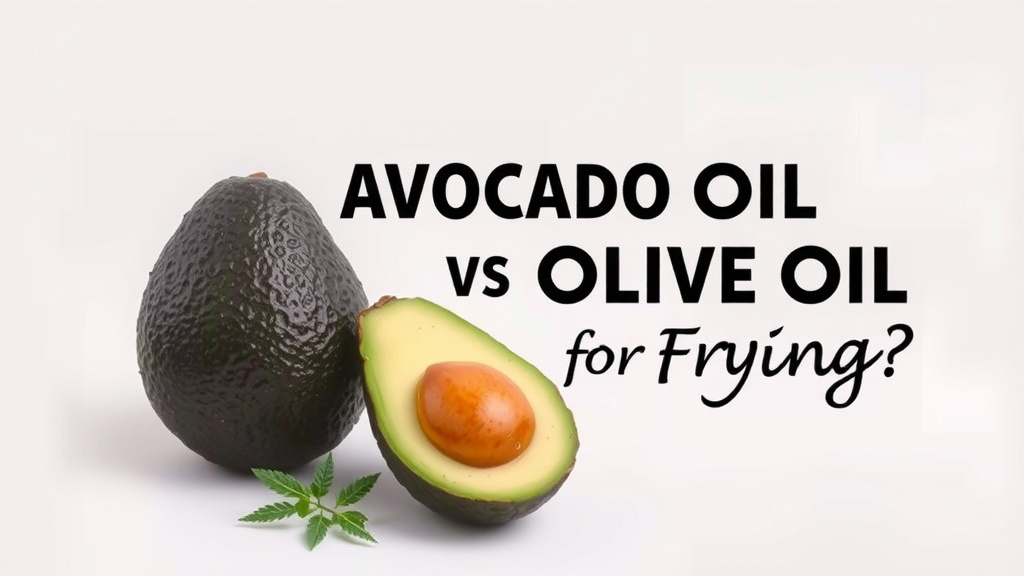
Avocado Oil vs Olive Oil for Frying: Which is Best
When frying foods, avocado oil is generally the better choice over olive oil. It has a much higher smoke point, meaning it can get hotter without burning. This makes it ideal for achieving that perfect crispy sear on your favorite fried dishes without the oil breaking down and creating unhealthy compounds. For everyday frying needs, avocado oil wins.
While both oils are popular in kitchens, their properties differ greatly for high-heat cooking. Olive oil, especially extra virgin olive oil, is fantastic for dressings and low-heat sautéing. But when the heat is on for frying, its lower smoke point can lead to a burnt taste. Research shows avocado oil’s neutral flavor and stability make it a superior option for frying, offering a cleaner taste and better performance.
- Avocado oil is best for frying due to its higher smoke point.
- Olive oil’s lower smoke point makes it less suitable for high-heat frying.
- Avocado oil can reach higher temperatures without burning.
- Olive oil is better for dressings and low-heat cooking.
- Consider your cooking method when choosing your oil.
Ready to dive deeper into the smoky differences between these two kitchen staples? Let’s break down exactly why avocado oil shines for frying and when you might still reach for that bottle of olive oil.
Frying with Avocado Oil vs. Olive Oil: Which Comes Out on Top?
You’re standing in front of your stove, pan sizzling, ready to fry up some delicious food. But then it hits you: which oil should you reach for? It’s a common kitchen dilemma. We’ve all been there, wondering if that bottle of olive oil can handle the heat. Today, we’re going to settle this once and for all. We’ll look at how avocado oil and olive oil stack up when things get hot. Get ready to learn which one makes your fried favorites perfectly crispy, not burnt and bitter.
Understanding Oil Smoke Points: The Key to Great Frying
The main reason one oil might be better for frying than another comes down to its smoke point. Think of smoke point as the temperature at which an oil starts to break down and burn. When oil burns, it not only makes your food taste bad but also releases harmful compounds. This is where the big difference between avocado oil and olive oil really shows itself.
What Happens When Oil Reaches Its Smoke Point?
When an oil gets too hot, its fat molecules start to break apart. This process creates smoke. As more smoke appears, the oil begins to degrade. This degradation can produce free radicals, which are unstable molecules linked to various health concerns. Additionally, the oil can develop an unpleasant, acrid flavor that will transfer to whatever you’re cooking. Nobody wants burnt-tasting food, right?
Avocado Oil’s Impressive Smoke Point
Avocado oil, especially refined avocado oil, is a champion when it comes to heat. We found that it typically has a smoke point of around 500-520°F (270-271°C). This is remarkably high! This means you can heat avocado oil to very high temperatures without worrying about it smoking or burning. It stays stable and does its job beautifully, letting your food achieve that desirable golden-brown crust.
Olive Oil’s More Delicate Nature
Olive oil, on the other hand, is a bit more sensitive to heat. Extra Virgin Olive Oil (EVOO), which is the least processed and most flavorful type, has a smoke point closer to 375-405°F (190-207°C). While this is perfectly fine for many cooking methods like sautéing or roasting at moderate temperatures, it’s much lower than avocado oil’s. If you try to deep-fry with EVOO, you’ll likely reach its smoke point quickly.
Refined vs. Unrefined Oils: Does it Matter?
It’s important to note that processing plays a role. Refined oils (like refined avocado oil or light olive oil) generally have higher smoke points because impurities that cause smoking have been removed. Unrefined oils (like EVOO or unrefined avocado oil) retain more of their natural compounds, which can affect their smoke points and flavors. For frying, refined versions of either oil will generally perform better than their unrefined counterparts.
Flavor Profile: How Each Oil Impacts Your Dish
Beyond the smoke point, the flavor each oil brings to your food is another key consideration. This is where personal preference and the type of dish you’re making come into play. Do you want your fried chicken to taste like… well, fried chicken? Or are you aiming for a subtle, nutty undertone?
Avocado Oil: The Neutral Canvas
One of the biggest advantages of avocado oil for frying is its neutral flavor. When you use refined avocado oil, it has a very mild taste that doesn’t overpower your food. This makes it ideal for frying things like french fries, chicken, or fish where you want the natural taste of the ingredients to shine through. It lets the crispy exterior and juicy interior be the stars of the show.
Olive Oil: The Flavor Contributor
Extra Virgin Olive Oil has a distinct, often fruity or peppery flavor. While this is wonderful for dipping bread or drizzling over a salad, it can be too much for certain fried dishes. Imagine biting into a perfectly fried piece of calamari that suddenly tastes intensely of olive. For many, this isn’t the desired outcome. Lighter or refined olive oils will have a milder flavor, but still, they often don’t match avocado oil’s neutrality.
Health Considerations: What the Science Says
When choosing cooking oils, health is often on our minds. Both avocado oil and olive oil are considered healthy fats, primarily composed of monounsaturated fatty acids. However, their behavior during high-heat cooking introduces different health aspects to consider.
Stability Under Heat
A stable oil maintains its chemical structure when heated. Research published in journals like the Journal of Agricultural and Food Chemistry has shown that oils high in monounsaturated fats, like avocado oil and olive oil, tend to be more stable than those high in polyunsaturated fats (like soybean or corn oil) when heated (N.A.B. R.M. V. B. B.). However, avocado oil’s higher smoke point means it remains stable at temperatures where olive oil would begin to break down, potentially forming less desirable compounds.
Nutrient Retention
Both oils offer beneficial nutrients. Olive oil, especially EVOO, is well-known for its polyphenols, which are antioxidants. However, high-heat frying can degrade some of these sensitive compounds. Avocado oil also contains beneficial compounds, and its stability at high temperatures may help preserve them better during the frying process compared to olive oil reaching its limit.
When to Choose Which Oil: A Quick Guide
So, when should you grab that bottle of avocado oil, and when might olive oil still be your best friend in the kitchen?
Avocado Oil is Your Go-To For:
- High-heat frying methods like deep-frying and pan-frying.
- Achieving a crispy, perfectly browned sear on meats, poultry, and vegetables.
- When you want a neutral oil that won’t alter the flavor of your dish.
- Frying delicate items like fish or tempura where a clean taste is essential.
Olive Oil Shines For:
- Low to medium-heat cooking, such as sautéing vegetables or gentle pan-searing.
- Making salad dressings and marinades.
- Dipping bread or finishing cooked dishes where its flavor is desired.
- Roasting vegetables or meats at temperatures below its smoke point.
Making Your Choice: A Simple Checklist
Ready to make the best decision for your next culinary adventure? Keep these points in mind:
- What’s the temperature you’ll be cooking at?
- Do you want the oil’s flavor to be noticeable or subtle?
- Are you aiming for a crispy, fried texture?
- Consider the type of food you’re preparing.
- Think about the overall flavor profile of your dish.
By understanding the smoke points and flavor profiles, you can confidently choose the right oil. For most high-heat frying applications, avocado oil offers a superior, more stable, and cleaner-tasting experience compared to olive oil. It’s a fantastic way to ensure your fried foods turn out perfectly delicious every time, without the worry of burnt oil.
Conclusion
You now have the lowdown on why avocado oil is your best bet for frying. Its significantly higher smoke point means no more burnt oil or bitter flavors ruining your meals. You can achieve that perfect crispy texture with confidence. While olive oil has its place for lower-heat cooking and dressings, when you’re ready to fry, reach for avocado oil. It’s the stable, neutral choice that lets your food shine.
So, for your next frying adventure, make the switch to avocado oil. Your taste buds—and your stomach—will thank you for it!
Frequently Asked Questions
Can I use extra virgin olive oil for frying?
While you can technically use extra virgin olive oil for some lower-heat frying, it’s generally not recommended for high-heat methods like deep-frying. Its smoke point is too low, and it can burn quickly, leading to a bad taste and potentially unhealthy compounds.
Does avocado oil have a strong flavor when frying?
Refined avocado oil has a very neutral flavor. This is one of its biggest advantages for frying, as it won’t impart any unwanted taste to your food. You’ll simply enjoy the taste of whatever you’re cooking.
Is avocado oil healthier than olive oil for frying?
Both are healthy fats. However, because avocado oil has a higher smoke point, it remains more stable at frying temperatures. This means it’s less likely to break down and form less desirable compounds compared to olive oil when heated intensely.
What happens if I fry with olive oil and it starts smoking?
If your olive oil starts smoking, it has reached its smoke point and is beginning to break down. You should remove the pan from the heat immediately, discard the oil, and clean the pan before starting over with fresh oil. Continuing to cook with smoking oil can make your food taste burnt and create harmful substances.
Which is better for pan-searing steak: avocado oil or olive oil?
For pan-searing steak, where high heat is essential for a good crust, avocado oil is the superior choice. Its high smoke point allows you to get the pan very hot without the oil burning, which is key for a perfect sear.

![7 Best High End Olive Oil [2026]](https://bestpureessentialoils.com/wp-content/uploads/2026/08/7-best-high-end-olive-oil-2026-featured-768x432.jpg)
![7 Best Foods Olive Oil [2026]](https://bestpureessentialoils.com/wp-content/uploads/2026/08/7-best-foods-olive-oil-2026-featured-768x432.jpg)