
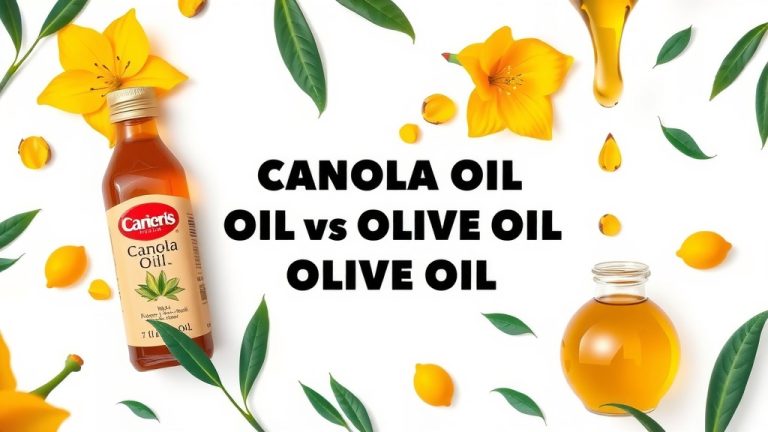
Canola Oil vs Olive Oil for Frying: Which Reigns Supreme
When frying, canola oil is generally a better choice than olive oil for everyday cooking due to its higher smoke point. While both are healthy options, olive oil can burn at lower temperatures, potentially affecting flavor and producing undesirable compounds. For high-heat frying, canola oil often performs more reliably.
You might be wondering which oil can handle the heat better. We found that canola oil’s stability under high temperatures makes it a more forgiving option for many popular frying methods. Olive oil, especially extra virgin varieties, is often best reserved for lower-heat cooking or finishing dishes where its flavor shines.
- Canola oil has a higher smoke point, making it better for high-heat frying.
- Olive oil can burn more easily, affecting taste and health.
- For everyday frying, canola oil is often the more practical choice.
- Extra virgin olive oil is best used for low-heat cooking or flavor.
Let’s dive deeper into why these differences matter for your kitchen creations and how to pick the best oil for your needs.
Understanding Oil for Frying: Canola vs. Olive
When you’re standing in front of the stove, deciding which oil to reach for can feel like a small but important choice. You want your food to turn out perfectly. Sometimes, that means crisp and golden, other times it means tender and flavorful. The oil you pick plays a big role. We’ve looked into canola oil and olive oil to see how they stack up for frying.
Research consistently shows that certain oils handle heat better than others. This is mainly due to their smoke point. The smoke point is the temperature at which an oil starts to break down and produce visible smoke. This is a key factor for frying. When an oil smokes, it can develop a bitter taste. It can also break down into less desirable compounds. Let’s compare how canola and olive oil perform when the heat is on.
What is a Smoke Point, Anyway?
Think of an oil’s smoke point like a thermostat for your cooking fat. It tells you the maximum temperature before the oil starts to degrade. Below this temperature, the oil stays stable. It does its job of transferring heat and giving food that delicious crispy texture. Once it hits its smoke point, things change.
When oil smokes, it’s a sign that its fatty acids are breaking apart. This process can create compounds that aren’t great for your food’s flavor. It can also produce free radicals. These are molecules that can be harmful. For safe and tasty frying, you want an oil with a smoke point well above your cooking temperature (Mayo Clinic).
Canola Oil: The Workhorse of the Kitchen
Canola oil is made from the seeds of the canola plant. It’s a popular choice for many home cooks. One of its biggest advantages is its high smoke point. Refined canola oil typically has a smoke point around 400°F (204°C). This makes it very versatile for different cooking methods.
Because it can handle high temperatures, canola oil is great for pan-frying, deep-frying, and stir-frying. It doesn’t impart a strong flavor of its own. This means your food’s taste stays the focus. Many chefs and home cooks find it a reliable option for achieving a crispy exterior on fried chicken or potatoes. It’s also generally quite affordable.
Refined vs. Unrefined Canola
It’s important to know that there are different types of canola oil. Most cooking oils you find on the shelf are refined. This means they’ve been processed to remove impurities. This process also raises the smoke point. Unrefined or cold-pressed canola oil might have a lower smoke point and a more noticeable flavor.
For frying, you’ll usually want to choose refined canola oil. Its higher smoke point makes it a more stable choice for your hot pans. You can often find its smoke point listed on the label, which is helpful!
Olive Oil: Flavorful, But Fragile
Olive oil comes from pressing whole olives. It’s celebrated for its rich flavor and health benefits. However, when it comes to frying, its characteristics can be a bit trickier. The smoke point of olive oil varies significantly depending on the type.
Extra virgin olive oil (EVOO) is the least processed. It has a lovely fruity flavor but a lower smoke point, typically around 375°F (190°C). This means it can start to smoke and break down at temperatures used for some frying methods. Regular or light olive oil, which is more refined, has a higher smoke point, closer to 470°F (243°C). This makes it a better candidate for hotter cooking.
The Flavor Factor with Olive Oil
One of the main reasons people love olive oil is its taste. Extra virgin olive oil, in particular, has a distinct grassy or peppery flavor. This flavor can be wonderful when used in salad dressings or drizzled over finished dishes. But when it burns during frying, that lovely flavor can turn bitter.
If you’re frying at lower temperatures, like sautéing vegetables, olive oil can work well. You’ll still want to watch it carefully to avoid burning. For recipes where the olive oil flavor is meant to be part of the dish, lower heat is usually best.
Comparing Canola and Olive Oil for Frying
Let’s put these two oils side-by-side for frying. We can see the key differences clearly. This comparison can help you make the best choice for your specific cooking task.
| Feature | Canola Oil (Refined) | Olive Oil (Extra Virgin) | Olive Oil (Light/Refined) |
|---|---|---|---|
| Smoke Point | ~400°F (204°C) | ~375°F (190°C) | ~470°F (243°C) |
| Flavor Profile | Neutral | Fruity, Peppery | Mild |
| Best For Frying | High-heat frying, deep-frying, general cooking | Low-heat sautéing, finishing dishes | Moderate to high-heat frying |
| Health Considerations | Good source of monounsaturated fats, omega-3s | Rich in monounsaturated fats, antioxidants | Good source of monounsaturated fats |
When to Choose Canola Oil for Frying
If your recipe calls for high-heat frying, canola oil is often the star. Think about making crispy French fries or perfectly seared chicken cutlets. These methods require consistent, high temperatures. Canola oil’s stability means it can handle this heat without breaking down too quickly.
It’s also a great choice when you want the flavor of your food to shine. Because canola oil is so neutral, it won’t interfere with the tastes of your ingredients. It’s a dependable, everyday cooking oil for many popular dishes.
When to Choose Olive Oil for Frying
Olive oil, especially extra virgin, is wonderful for lower-heat cooking. Sautéing garlic and onions for a sauce? Using it to lightly coat vegetables before roasting? These are perfect scenarios. You can also use a drizzle of EVOO as a finishing oil on soups, salads, or pasta for added flavor.
If you’re set on using olive oil for frying and need higher heat, opt for a light or refined olive oil. These have been processed further, giving them a higher smoke point. They are a better choice for pan-frying or when your recipe requires hotter temperatures than EVOO can handle.
Tips for Healthy Frying with Any Oil
No matter which oil you choose, how you fry matters. Here are a few tips to help you get the best results and keep your cooking as healthy as possible.
- Don’t overheat your oil. Watch for smoke; if you see it, lower the heat.
- Use the right amount of oil. Too little can cause food to stick and burn. Too much can make food greasy.
- Don’t overcrowd the pan. This lowers the oil temperature, leading to soggy food.
- Drain excess oil. Place fried foods on a wire rack or paper towels to absorb extra oil.
- Consider the type of oil for the temperature. Match the oil’s smoke point to your cooking method.
By understanding the properties of different oils, you can make informed decisions in the kitchen. Both canola and olive oil have their strengths. Knowing when to use which can help you achieve delicious and satisfying results every time you cook.
Conclusion
When deciding between canola and olive oil for frying, your best bet often comes down to the heat. For those high-heat frying jobs, like getting crispy chicken or fries, refined canola oil is usually your go-to. Its neutral flavor and higher smoke point mean better results without burning. Olive oil, especially extra virgin, shines when you’re cooking at lower temperatures or want its delicious flavor to enhance your dish. By matching the oil to your cooking method, you’ll achieve tastier food and avoid unwanted bitterness. Now you’re ready to pick the right oil and get cooking!
Frequently Asked Questions
Can I use extra virgin olive oil for everyday frying?
While extra virgin olive oil is wonderfully healthy and flavorful, its lower smoke point makes it less ideal for regular high-heat frying. It can burn more easily, affecting both taste and potentially creating undesirable compounds. It’s best reserved for lower-heat cooking or as a finishing oil.
What if my recipe calls for olive oil but I want to fry at high heat?
If your recipe specifically calls for olive oil but you need higher heat, opt for a light or refined olive oil. These types have been processed further, giving them a higher smoke point that can better handle hotter cooking temperatures compared to extra virgin olive oil.
Does canola oil have a strong flavor when frying?
No, canola oil has a very neutral flavor. This is one of its main advantages for frying. It won’t impart its own taste onto your food, allowing the natural flavors of your ingredients to be the star of the dish.
Is it okay if my frying oil smokes a little?
Ideally, you want to avoid your frying oil smoking. When oil smokes, it’s a sign that it’s breaking down. This can lead to a bitter taste in your food and the formation of less desirable compounds. Always try to keep your oil below its smoke point.
Which oil is healthier for frying: canola or olive oil?
Both canola and olive oil offer health benefits when used appropriately. Olive oil, especially extra virgin, is rich in monounsaturated fats and antioxidants. Canola oil is also a good source of monounsaturated fats and contains omega-3 fatty acids. The “healthiest” choice often depends on how you use it, with both being good options when not overheated.

![7 Best Medicinal Olive Oil [2026]](https://bestpureessentialoils.com/wp-content/uploads/2026/09/7-best-medicinal-olive-oil-2026-featured-768x432.jpg)
![7 Best Olive Oil At Williams Sonoma [2026]](https://bestpureessentialoils.com/wp-content/uploads/2026/09/7-best-olive-oil-at-williams-sonoma-2026-featured-768x432.jpg)
![7 Best Grocery Store Olive Oil [2026]](https://bestpureessentialoils.com/wp-content/uploads/2026/07/7-best-grocery-store-olive-oil-2026-featured-768x432.jpg)