
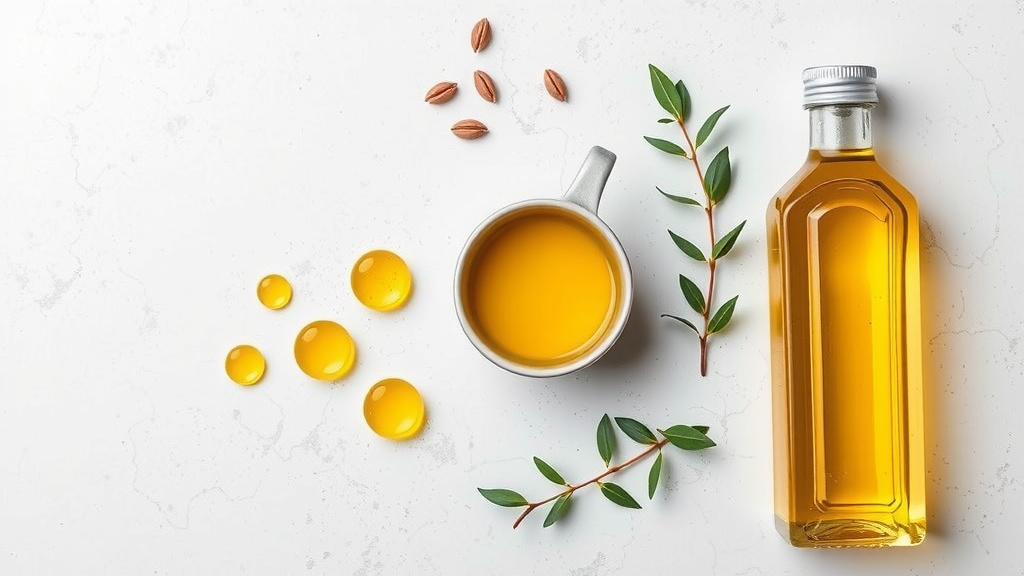
Canola Oil vs Olive Oil: Calorie Breakdown
When comparing canola oil and olive oil, there’s often a tie in total calories per tablespoon, with both offering around 120 calories. The main difference lies in their fatty acid profiles and how they are processed. Both are widely used in cooking, but understanding their nutritional makeup can help you choose the best option for your needs.
While calories are similar, the health benefits can vary. Olive oil, especially extra virgin, is lauded for its monounsaturated fats and antioxidants. Canola oil, while lower in saturated fat and a good source of omega-3s, undergoes more processing. We found that considering the type of fat and potential health impacts is key when deciding between them.
- Calories in canola oil and olive oil are nearly identical per tablespoon (around 120).
- Olive oil is richer in monounsaturated fats and antioxidants.
- Canola oil is lower in saturated fat and contains omega-3 fatty acids.
- Processing methods differ significantly between the two oils.
- Your choice depends on your cooking style and health goals.
Let’s dive deeper into the specifics of each oil, so you can make an informed decision for your kitchen.
Decoding Oil Calories: Canola vs. Olive
You’re probably wondering about the calorie counts in your cooking oils. When you look at canola oil and olive oil side-by-side, you’ll find they’re surprisingly similar. Most sources, including the USDA FoodData Central, show that a single tablespoon of either oil contains roughly 120 calories.
This means for general calorie tracking, you don’t need to make huge adjustments when swapping between them. Your daily calorie intake won’t dramatically shift just because you chose canola over olive oil for your salad dressing or stir-fry.
Understanding Fat: The Real Difference
While the calorie numbers are almost twins, the types of fats they contain are where the real divergence happens. This is the key factor most nutritionists point to when comparing them.
Monounsaturated Fats: Olive Oil’s Star Player
Olive oil, especially extra virgin olive oil, is famous for its high content of monounsaturated fats (MUFAs). Research shows that MUFAs are considered heart-healthy fats. They can help lower your ‘bad’ LDL cholesterol levels while potentially raising your ‘good’ HDL cholesterol (National Institutes of Health).
Think of MUFAs like a helpful bodyguard for your heart. They work to keep things running smoothly. Many health organizations recommend increasing MUFA intake as part of a balanced diet.
Polyunsaturated Fats: A Different Balance
Both oils contain polyunsaturated fats (PUFAs), including omega-3 and omega-6 fatty acids. Canola oil is often highlighted for having a good ratio of omega-3 to omega-6. Omega-3s are known for their anti-inflammatory properties. They play a role in brain health and reducing the risk of chronic diseases.
Olive oil also contains PUFAs, but its dominant fat type is still MUFA. The balance of omega-3s and omega-6s is important. While both are essential, a diet with too many omega-6s and not enough omega-3s can contribute to inflammation.
Saturated Fats: Where Canola Shines (a Little)
When it comes to saturated fats, canola oil generally has a lower amount than olive oil. Saturated fats are the ones health guidelines often suggest limiting. Reducing your intake of saturated fats can be beneficial for heart health (CDC).
Canola oil typically contains about 7% saturated fat, while olive oil might have around 14%. So, if you’re very focused on minimizing saturated fat, canola oil has a slight edge here.
Processing Matters: How They’re Made
The journey from plant to bottle differs greatly for these two oils. Understanding this can shed light on their nutritional profiles and how they’re used in cooking.
Olive Oil: From Fruit to Bottle
Extra virgin olive oil is essentially the juice of olives. It’s extracted mechanically or by other physical means without using high heat or harsh chemicals. This method helps preserve its natural flavor, aroma, and beneficial compounds, like antioxidants.
Other types of olive oil (like virgin, refined, or pure) undergo more processing, which can alter their nutritional content and taste. For the most health benefits, many experts recommend sticking with extra virgin or virgin olive oil.
Canola Oil: A More Industrial Process
Canola oil is derived from the seeds of the rapeseed plant. The name “canola” itself is a portmanteau of “Canadian oil, low acid.” Modern canola varieties were developed to have lower levels of erucic acid, a compound previously found to be harmful in high amounts.
The seeds are typically crushed and then processed using a solvent, usually hexane, to extract the oil. After extraction, the oil is refined, bleached, and deodorized to remove impurities, color, and odors. This refining process can strip away some of the natural nutrients and antioxidants present in the raw oil.
Nutritional Snapshot: A Quick Comparison
Let’s break down the numbers in a simple table to see how they stack up.
| Nutrient (per 1 tbsp) | Canola Oil (approx.) | Olive Oil (approx.) |
|---|---|---|
| Calories | 120 | 120 |
| Total Fat | 14g | 14g |
| Saturated Fat | 1g | 2g |
| Monounsaturated Fat | 9g | 10g |
| Polyunsaturated Fat | 4g | 1.5g |
| Omega-3 Fatty Acids | 1.3g | 0.1g |
| Omega-6 Fatty Acids | 2.7g | 1.4g |
As you can see, the main differences lie in the types of fats. Olive oil leads in MUFAs, while canola oil offers more omega-3s and less saturated fat.

Cooking Considerations: Which Oil for Which Dish?
Your choice of oil can depend on what you’re cooking and the flavors you want. Both are versatile, but they do have slightly different smoke points and flavor profiles.
Flavor Profile
Olive oil, especially extra virgin, has a distinct fruity or peppery flavor that can enhance dishes. It’s wonderful in salad dressings, marinades, or drizzled over finished meals. Refined olive oils have a more neutral taste.
Canola oil is usually neutral in flavor and aroma. This makes it a great choice when you don’t want the oil to compete with other ingredients. It’s often preferred for baking and frying where a neutral base is desired.
Smoke Point
The smoke point is the temperature at which an oil starts to smoke and break down. When oil smokes, it can produce harmful compounds and taste bitter.
Canola oil generally has a higher smoke point (around 400°F or 204°C) compared to extra virgin olive oil (around 375°F or 190°C). Refined olive oil has a higher smoke point than extra virgin.
This means canola oil might be a slightly better choice for high-heat cooking methods like deep-frying or searing. Olive oil is excellent for sautéing, baking, and lower-heat cooking.
Making Your Choice: What Works for You?
So, how do you decide? It really comes down to your personal preferences, dietary goals, and cooking style.
Are you focused on maximizing heart-healthy monounsaturated fats and enjoying a richer flavor? Olive oil might be your go-to. Do you need a neutral oil for high-heat cooking or want to boost your omega-3 intake with less saturated fat? Canola oil could be a good fit.
We found that many people use both oils in their kitchens for different purposes. It’s not always an either/or situation.
Your Kitchen Checklist:
- Consider your cooking method (high heat vs. low heat).
- Think about the flavor profile you want for your dish.
- Review your daily fat intake goals.
- Check the smoke points for your intended use.
- Choose unrefined (like extra virgin olive oil) for maximum nutrients when possible.
Conclusion
You’ve seen that while canola oil and olive oil offer a similar calorie count per tablespoon, their nutritional profiles tell a different story. Olive oil stands out for its heart-healthy monounsaturated fats and antioxidants, particularly in its extra virgin form. Canola oil, on the other hand, provides more omega-3s and less saturated fat, with a neutral flavor perfect for many cooking applications.
Your best choice depends on your health goals and how you plan to use it. Consider incorporating both into your kitchen repertoire to benefit from their unique strengths. Start by thinking about your next meal – will a rich flavor or a neutral base serve you better?
Frequently Asked Questions
Is canola oil or olive oil better for weight loss?
Both oils have the same calorie count per tablespoon, so neither has a direct advantage for weight loss. The key is moderation. Focus on portion control and how the oil fits into your overall daily calorie intake.
Can I use canola oil instead of olive oil for salad dressing?
Yes, you can, especially if you prefer a neutral flavor. Olive oil, particularly extra virgin, adds a distinct taste. If you want the health benefits of olive oil without the strong flavor, consider using a lighter or refined olive oil instead.
Which oil is healthier for everyday cooking?
For everyday cooking, the “healthier” choice can depend on your priorities. Olive oil is rich in monounsaturated fats beneficial for heart health. Canola oil offers a good source of omega-3s and is lower in saturated fat. Many people find using both oils for different purposes is a practical approach.
Does the processing of canola oil make it less healthy than olive oil?
Canola oil undergoes more extensive processing than extra virgin olive oil, which can reduce some of its natural nutrients. However, research indicates that canola oil is still a source of beneficial fatty acids, including omega-3s. Extra virgin olive oil retains more of its natural antioxidants due to minimal processing.
Which oil is better for high-heat cooking like frying?
Canola oil generally has a higher smoke point than extra virgin olive oil, making it a slightly better option for high-heat cooking methods like frying or searing. When oil smokes, it can degrade and produce unwanted compounds, so a higher smoke point is desirable for these techniques.


![7 Best Face Olive Oil [2026]](https://bestpureessentialoils.com/wp-content/uploads/2026/08/7-best-face-olive-oil-2026-featured-768x432.jpg)
![7 Best Extra Virgin Olive Oil Brands In Usa [2026]](https://bestpureessentialoils.com/wp-content/uploads/2026/08/7-best-extra-virgin-olive-oil-brands-in-usa-2026-featured-768x432.jpg)