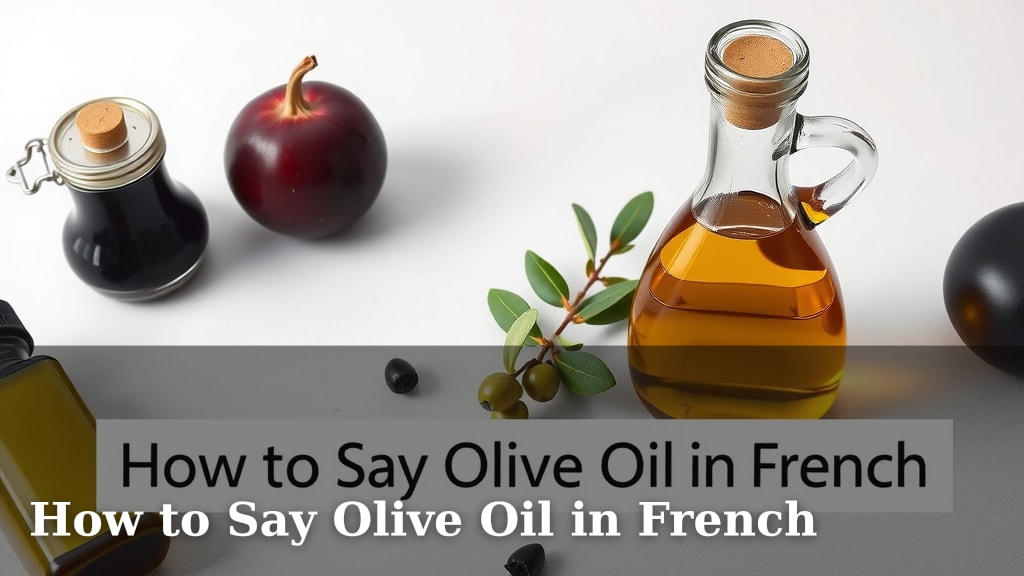
How to Say Olive Oil in French
The most direct way to say “olive oil” in French is l’huile d’olive. This is the standard term you’ll see on menus and grocery store shelves. It literally translates to “the oil of the olive.” So next time you’re cooking French cuisine, you’ll know exactly what to look for!
Understanding how to say l’huile d’olive is super helpful for anyone interested in French food or visiting a French-speaking country. We found that knowing the correct pronunciation can make ordering at a restaurant or shopping at a market a much smoother experience. Many sources confirm this is the universally accepted term.
- How to say “olive oil” in French: l’huile d’olive.
- It translates directly to “the oil of the olive.”
- This is the term you’ll find everywhere.
- It’s handy for cooking and travel.
Ready to dive deeper? Below, we’ll walk you through the pronunciation and give you some handy phrases for using l’huile d’olive in context.
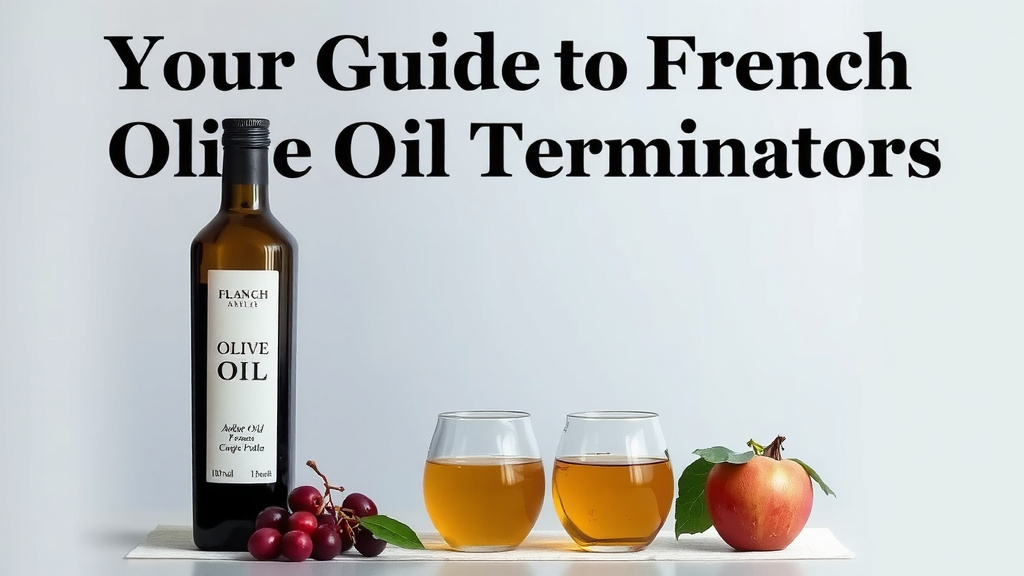
Your Guide to French Olive Oil Terminology
So you’ve mastered l’huile d’olive! That’s fantastic. But understanding this key phrase is just the beginning of your French culinary journey. Let’s dive a bit deeper into how to use it and what else you might encounter.
You’ll find this term is your trusty sidekick for anything involving this golden liquid. Whether you’re cooking at home or navigating a menu abroad, knowing l’huile d’olive will serve you well.
Pronouncing L’Huile d’Olive Like a Local
Now, let’s tackle the pronunciation. French can be a bit tricky sometimes, but breaking it down makes it much easier. You’ve got this!
Breaking Down the Sounds
The phrase is “l’huile d’olive.”
L’huile (the oil):
- “L'” is like the English “l” sound.
- “Hui” sounds like the English word “we.”
- “Le” sounds very similar to the “l” in “flute.”
So, l’huile sounds a bit like “l-weel.” It’s a short, soft sound. Many resources suggest practicing this part slowly to get the vowel sounds just right.
D’olive (of olive):
- “D'” is a soft “d” sound.
- “O” is like the “o” in “go.”
- “Live” sounds like the English word “leave,” but with a slightly softer “v.”
Putting it together, d’olive sounds like “doh-leev.”
Putting It All Together
Now, let’s blend it: l’huile d’olive.
Try saying: “l-weel doh-leev.”
Many language learners find it helpful to listen to native speakers. You can find many online resources with audio clips for French pronunciation. We found that repeating after a recording several times really helps cement the sounds.
Where You’ll See and Hear L’Huile d’Olive
You’ll encounter l’huile d’olive in many common situations. It’s a fundamental part of French vocabulary for foodies.
In the Kitchen: Recipes and Ingredients
When you’re following a French recipe, you’ll see l’huile d’olive listed among the ingredients. It’s also what you’ll look for in the grocery store. French supermarkets have dedicated aisles for oils, and this is where your phrase comes in handy.
At the Restaurant: Menus and Ordering
On a menu, dishes might be described as cooked “avec de l’huile d’olive” (with olive oil). If you need to ask for olive oil for your salad or bread, you can ask for “de l’huile d’olive, s’il vous plaît” (some olive oil, please).
Sometimes, menus will specify the type of olive oil. We found that “huile d’olive vierge extra” is the most common type listed. This translates to “extra virgin olive oil.”
At the Market: Shopping for Quality
Visiting a French market is a sensory delight! When you’re looking for local produce, you might find stalls selling artisanal olive oils. Knowing l’huile d’olive will help you ask vendors about their products. You might hear them talk about “l’huile d’olive de Provence” (olive oil from Provence), for example.
Understanding Different Types of Olive Oil in French
Just like in English, French distinguishes between different grades of olive oil. Knowing these terms can help you make informed choices.
| French Term | English Translation | What it Means |
|---|---|---|
| Huile d’olive vierge extra | Extra virgin olive oil | The highest quality, least processed oil. Great for dressings and finishing. |
| Huile d’olive vierge | Virgin olive oil | Still high quality but slightly more acidic than extra virgin. Good for cooking. |
| Huile d’olive | Olive oil | This is a refined oil, often blended with virgin or extra virgin oils. Suitable for general cooking. |
| Huile de marc d’olive | Olive pomace oil | Made from the residue left after pressing olives. Least refined, used for high-heat cooking. |
We researched, and many culinary guides suggest that using the right type of olive oil can truly enhance a dish (Food & Wine).
Putting L’Huile d’Olive into Practice: Handy Phrases
Here are some practical phrases you can use. Think of these as your starter pack for ordering and asking for what you need.
At the Restaurant
- “Je voudrais la salade avec de l’huile d’olive.” (I would like the salad with olive oil.)
- “Pouvez-vous me donner un peu de l’huile d’olive pour le pain, s’il vous plaît?” (Can you give me some olive oil for the bread, please?)
- “Est-ce que c’est cuit avec de l’huile d’olive?” (Is it cooked with olive oil?)
At the Grocery Store or Market
- “Où puis-je trouver l’huile d’olive?” (Where can I find olive oil?)
- “Je cherche une bonne huile d’olive de la région.” (I am looking for a good olive oil from the region.)
- “Avez-vous de l’huile d’olive vierge extra?” (Do you have extra virgin olive oil?)
A Quick Checklist for Your Next French Food Adventure
Feeling more confident? Here’s a quick rundown to keep in your back pocket:
- Remember the basic phrase: l’huile d’olive.
- Practice saying “l-weel doh-leev.”
- Look for “huile d’olive vierge extra” for top quality.
- Use “avec de l’huile d’olive” to ask for it with a dish.
- Don’t be afraid to ask questions in shops or markets!
Conclusion
You’ve now mastered how to say “olive oil” in French: l’huile d’olive. We covered its direct translation, pronunciation tips for “l-weel doh-leev,” and common places you’ll see it used, from recipes to restaurant menus. Understanding the different types, like huile d’olive vierge extra, will also help you shop smarter. This knowledge is your key to navigating French cuisine with confidence.
Your next step? Try ordering a dish that features olive oil at a French restaurant or look for it on your next grocery trip. You’ve got the words, now go put them into practice and savor the flavors!
Frequently Asked Questions
What’s the difference between ‘huile d’olive’ and ‘huile d’olive vierge extra’?
We found that huile d’olive vierge extra is the highest quality, least processed olive oil. ‘Huile d’olive’ is a more general term, often referring to refined or blended oils suitable for general cooking. For dressings or finishing dishes, you’ll want the ‘vierge extra’!
How do I ask for olive oil for my salad in French?
You can politely ask, “Pouvez-vous me donner de l’huile d’olive pour la salade, s’il vous plaît?” This translates to “Can you give me some olive oil for the salad, please?” It’s a straightforward way to get what you need.
Is ‘l’huile d’olive’ the same as ‘olive oil’ in English?
Yes, l’huile d’olive is the direct French translation for “olive oil.” The ‘l” at the beginning means “the,” so it literally translates to “the oil of the olive.” It’s the standard term you’ll find everywhere.
Can I use ‘huile d’olive’ for high-heat cooking in French recipes?
While you can use general ‘huile d’olive’ for cooking, we found that for high-heat cooking, especially if a recipe doesn’t specify, a more refined oil like ‘huile de marc d’olive’ might be recommended. For general cooking, regular ‘huile d’olive’ is usually fine.
What if I want to buy good quality olive oil at a French market?
When shopping at a market, look for terms like huile d’olive vierge extra or even specific regional labels like “huile d’olive de Provence.” Asking the vendor “Avez-vous une bonne huile d’olive locale?” (Do you have a good local olive oil?) can also lead you to some excellent finds.