
Olive Oil vs Vegetable Oil Calories Compared
When comparing olive oil and vegetable oil, you’ll find that **both contain roughly the same number of calories per tablespoon**, around 120. The main difference isn’t the calorie count itself, but rather the types of fats they contain and how those fats affect your health and cooking. So, while they’re calorically similar, they’re not quite the same.
Olive oil is primarily known for its monounsaturated fats, which many experts consider heart-healthy. Vegetable oils, often blends, can contain a mix of polyunsaturated and monounsaturated fats, but some may also include saturated or trans fats depending on the specific oils used and processing. Understanding these fat profiles helps you make the best choice for your meals.
- Both olive oil and vegetable oil have about 120 calories per tablespoon.
- Olive oil is rich in monounsaturated fats, good for your heart.
- Vegetable oils vary; some are great, others might have less healthy fats.
- The type of fat matters more than the calorie count for health.
- Processing and ingredients differ between brands, affecting oil quality.
Let’s break down the key differences and help you decide which oil is best for your pantry and your plate.
Olive Oil vs. Vegetable Oil: What’s the Real Calorie Difference?
You’re probably wondering about the nitty-gritty details of calories when you compare olive oil and vegetable oil. We’ve already touched on the fact that they’re pretty much neck-and-neck per tablespoon, around 120 calories. But what does that really mean for your cooking and your health? It’s less about the number and more about what’s *inside* that number.
Think of it this way: Would you rather have 120 calories from a sugary soda or 120 calories from a handful of almonds? The calorie count is the same, but the nutritional impact is worlds apart. The same applies to oils. The type of fat is the star of the show here.
Decoding the Fats: Monounsaturated vs. Polyunsaturated
This is where our two contenders really start to diverge. The fats within oils aren’t all created equal. They have different structures and behave differently in our bodies. Understanding these differences helps you make smarter choices for your well-being.
Olive Oil’s Fat Profile
Olive oil, especially extra virgin olive oil, is famous for its high content of monounsaturated fatty acids (MUFAs). We’re talking about oleic acid here, the main player. Many health organizations, including the U.S. Department of Agriculture (USDA), highlight MUFAs as a beneficial type of fat.
Why are MUFAs so good? Research suggests they can help lower bad cholesterol (LDL) levels while potentially raising good cholesterol (HDL) levels (National Institutes of Health). This is fantastic news for your heart health. It’s like giving your cardiovascular system a gentle, healthy hug.
Vegetable Oil’s Fat Profile
Now, “vegetable oil” is a bit of a broad term. It often refers to a blend of different oils, like soybean, corn, canola, or sunflower oil. Because of this blend, the fat profile can be quite varied. Many vegetable oils are rich in polyunsaturated fatty acids (PUFAs). These include omega-3 and omega-6 fatty acids.
PUFAs are also considered healthy fats and are essential for bodily functions. However, the balance between omega-3 and omega-6 is important. Some sources suggest that modern diets often have too much omega-6 relative to omega-3, which can lead to inflammation. We’ll dive into this a bit more later.
It’s also worth noting that some vegetable oil blends might contain saturated fats or even trans fats, especially if they’ve undergone certain processing methods. Always check the label!
Processing Matters: From Seed to Bottle
How an oil is made can significantly impact its nutritional quality and health benefits. This is a big differentiator between many olive oils and most processed vegetable oils.
The Making of Olive Oil
Extra virgin olive oil (EVOO) is essentially the juice of olives. It’s produced by mechanical means or other physical means only, under conditions, especially thermal conditions, that do not lead to alteration of the oil. This means minimal processing. It retains more of its natural antioxidants and flavor compounds.
Other types of olive oil, like “pure” or “light” olive oil, may undergo more refining. This can strip away some of the beneficial compounds. So, for the biggest health bang, reach for extra virgin.
The Making of Vegetable Oils
Most vegetable oils go through a more intensive refining process. This usually involves heating, bleaching, and deodorizing. These steps help create a neutral flavor and a longer shelf life. However, they can also reduce the levels of beneficial antioxidants and phytonutrients.
Some vegetable oils are labeled as “cold-pressed” or “unrefined.” These tend to retain more nutrients, similar to extra virgin olive oil. If you’re choosing a vegetable oil, looking for these labels can be a good indicator of quality.
Smoke Points: When Oils Start to Sizzle
The smoke point of an oil is the temperature at which it begins to smoke and break down. When oil smokes, it can produce harmful compounds and develop an unpleasant taste. This is a practical difference you’ll notice in your kitchen.
Olive Oil’s Smoke Point
Extra virgin olive oil generally has a smoke point around 375°F (190°C). Refined olive oils have higher smoke points, closer to 400-470°F (205-243°C). This makes EVOO great for most everyday cooking, like sautéing and baking.
Vegetable Oil’s Smoke Point
Most common vegetable oils, like canola and sunflower oil, have higher smoke points, often around 400-450°F (205-230°C). This makes them suitable for high-heat cooking methods like frying or searing.
So, if you’re planning on deep-frying your chicken wings, a vegetable oil might be a better choice due to its higher smoke point. For your daily salad dressing or a quick sauté, olive oil often fits the bill perfectly.
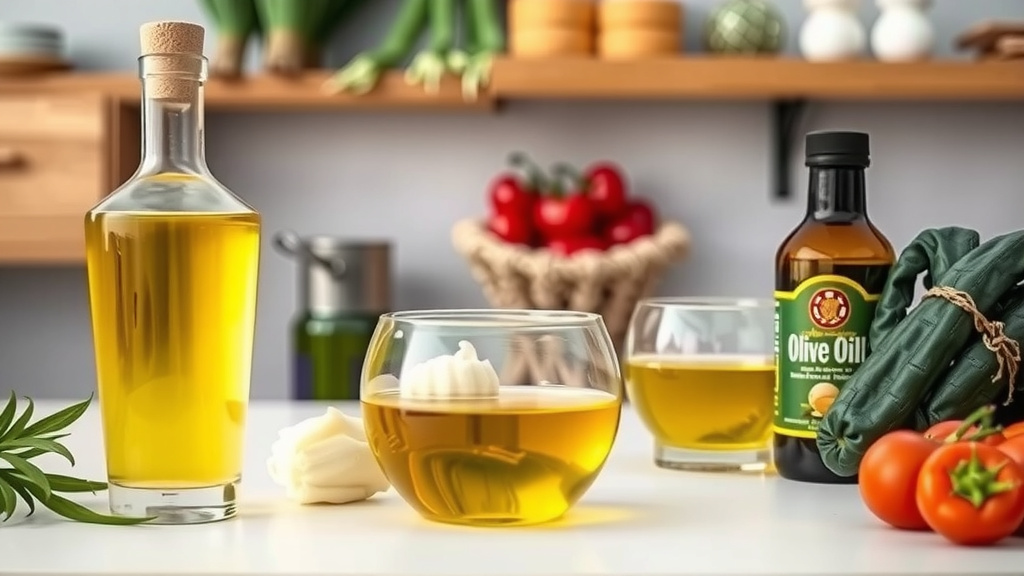
Nutrient Breakdown: Beyond Calories
Let’s put it all on the table, so to speak. While calories are equal, the micronutrients and fatty acid profiles are not. This is the core difference for your health.
| Feature | Olive Oil (Extra Virgin) | Vegetable Oil (Typical Blend) |
|---|---|---|
| Calories (per tbsp) | ~120 | ~120 |
| Primary Fat Type | Monounsaturated (Oleic Acid) | Polyunsaturated (Omega-3 & Omega-6), some Monounsaturated |
| Key Health Benefits (Research suggests) | Heart health, lower LDL cholesterol, anti-inflammatory properties from antioxidants (Mayo Clinic) | Essential fatty acids for brain function, may help lower cholesterol (if balanced Omega-3/6) |
| Antioxidants | High (Vitamin E, polyphenols) | Lower, depends on processing and oil type |
| Best For | Dressings, sautéing, baking, finishing dishes | High-heat cooking, frying, baking (depending on type) |
Notice how the table highlights that olive oil is packed with antioxidants like Vitamin E and polyphenols. These compounds help fight cell damage in your body. Vegetable oils may have some, but typically in lower amounts, especially if refined.
Making the Healthiest Choice for Your Kitchen
So, how do you pick the right oil for your needs? It depends on what you’re cooking and what health goals you have in mind.
- For heart health and daily use: Reach for extra virgin olive oil. Its monounsaturated fats and antioxidants are hard to beat for general well-being.
- For high-heat cooking: A high-smoke-point vegetable oil (like canola, sunflower, or safflower) is often a practical choice. Look for unrefined or cold-pressed versions if possible.
- For a balanced fatty acid intake: Consider incorporating a mix of oils. This could mean using olive oil for dressings and a separate oil rich in omega-3s (like flaxseed or walnut oil, used cold) for other applications.
- Read the labels: Always check the ingredients and nutrition facts. Avoid oils with hydrogenated oils or excessive saturated fats.
Ultimately, both olive oil and vegetable oil can fit into a healthy diet when used appropriately. The key is understanding their differences and making informed decisions based on your cooking methods and health priorities.
Quick Tips for Choosing Your Cooking Oil
- Check the smoke point for your cooking method.
- Prioritize unrefined oils like EVOO or cold-pressed varieties.
- Look for a balanced fatty acid profile on labels.
- Consider your health goals (heart health, inflammation).
- Don’t be afraid to use a mix of oils for different purposes.
Conclusion
You’ve learned that when it comes to calories, olive oil and vegetable oil are essentially tied, both offering about 120 calories per tablespoon. The real story lies in their fat profiles and processing. Olive oil, especially extra virgin, shines with heart-healthy monounsaturated fats and beneficial antioxidants. Vegetable oils can be a mixed bag, with many providing polyunsaturated fats but sometimes lacking in nutrients due to refining. For your healthiest kitchen, consider using extra virgin olive oil for everyday cooking and dressings, and opt for a vegetable oil with a high smoke point for intense heat. Now you can confidently choose the right oil for your next delicious meal!
Frequently Asked Questions
Is olive oil always healthier than vegetable oil?
Not necessarily. Extra virgin olive oil is generally considered healthier due to its high monounsaturated fat content and antioxidants. However, some refined vegetable oils might be suitable for high-heat cooking where olive oil’s delicate compounds could break down. Always check labels for processing and fat types.
Can I use olive oil for high-heat frying?
Extra virgin olive oil has a smoke point around 375°F, making it suitable for most everyday cooking like sautéing and baking. For very high-heat frying, a vegetable oil with a higher smoke point (like canola or sunflower) might be a more stable choice to prevent burning and unpleasant flavors.
Are all vegetable oils bad for you?
No, not at all. “Vegetable oil” is a broad category. Many vegetable oils are rich in polyunsaturated fats, including essential omega-3 and omega-6 fatty acids. The key is to look for less processed versions and be mindful of the overall balance of fats in your diet.
Does the processing of olive oil affect its calories?
The calorie count of olive oil remains remarkably consistent across different types, including extra virgin, pure, and light. Processing methods primarily affect the nutrient content, antioxidants, and flavor, rather than the total caloric value per tablespoon.
Why is the type of fat more important than calories in oil?
Your body uses fats for energy, but also for building cells and producing hormones. Different types of fats have different effects. Monounsaturated and polyunsaturated fats, found abundantly in olive oil and some vegetable oils, are associated with better heart health and reduced inflammation compared to excessive saturated or trans fats.

![7 Best Extra Virgin Olive Oil Brand [2026]](https://bestpureessentialoils.com/wp-content/uploads/2026/08/7-best-extra-virgin-olive-oil-brand-2026-featured-768x432.jpg)
![7 Best Fresh Olive Oil [2026]](https://bestpureessentialoils.com/wp-content/uploads/2026/08/7-best-fresh-olive-oil-2026-featured-768x432.jpg)
![7 Best Italian Olive Oil [2026]](https://bestpureessentialoils.com/wp-content/uploads/2026/07/7-best-italian-olive-oil-2026-featured-768x432.jpg)