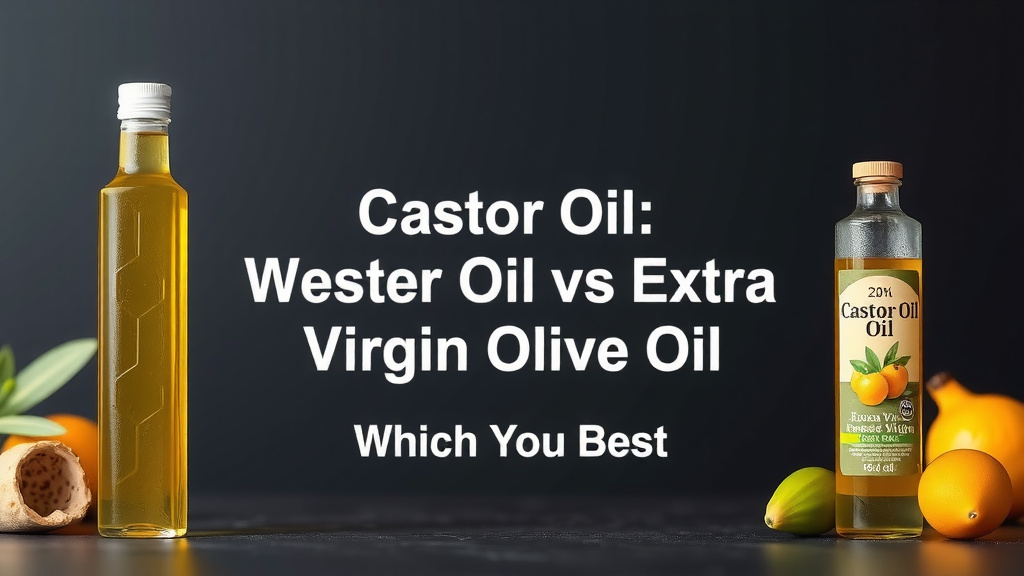
Castor Oil vs. Extra Virgin Olive Oil: Which is Best
When deciding between castor oil vs. extra virgin olive oil, extra virgin olive oil (EVOO) is generally the better choice for most cooking and everyday use due to its milder flavor and higher smoke point. Castor oil has a very distinct, strong taste and is typically used for medicinal or cosmetic purposes, not as a cooking oil.
While both are plant-based oils, they come from different sources and have vastly different properties. We found that understanding their unique benefits and best uses is key to picking the right one for your needs. EVOO is celebrated for its monounsaturated fats and antioxidants, making it a heart-healthy addition to your diet. Castor oil, on the other hand, is known for its ricinoleic acid content, which gives it powerful anti-inflammatory and laxative properties.
- EVOO is best for cooking, salad dressings, and as a finishing oil. Learn how EVOO is often used in cooking and its benefits.
- Castor oil is mainly for topical use (skin, hair) or internal medicinal purposes.
- EVOO offers heart-healthy monounsaturated fats and antioxidants.
- Castor oil’s ricinoleic acid provides anti-inflammatory benefits.
- They are NOT interchangeable for most applications.
Let’s dive into the specifics of what makes each oil special and when you should reach for one over the other.
Exploring the Differences: Castor Oil Versus Extra Virgin Olive Oil
You’ve likely seen both castor oil and extra virgin olive oil (EVOO) on shelves. They look like simple liquids, but they’re worlds apart in how you should use them. We found that understanding their core differences is key. EVOO is your go-to for the kitchen, while castor oil shines in other areas. Let’s break down why they aren’t interchangeable.
Extra Virgin Olive Oil: The Culinary Star
When you think of healthy oils for cooking and dressing salads, EVOO often comes to mind. We discovered that its popularity stems from its delicious flavor and versatility. It’s a staple in Mediterranean diets for good reason. Its properties make it a fantastic addition to many meals.
What Makes EVOO Special for Cooking?
EVOO is essentially the juice of olives. It’s extracted mechanically without heat or chemicals. This process preserves its natural flavor and beneficial compounds. Many experts say this makes it a superior choice for health-conscious cooks (Harvard Health Publishing).
Flavor Profile
The taste of EVOO can vary. Some are peppery and robust, while others are mild and buttery. This range of flavors allows it to complement a wide array of dishes. You can use it to add a burst of freshness to your favorite recipes.
Smoke Point and Cooking
EVOO has a moderate smoke point, typically between 325°F and 375°F (160°C-190°C). This makes it suitable for sautéing, roasting, and baking at moderate temperatures. However, it’s not ideal for very high-heat cooking like deep-frying. We found that for everyday cooking needs, its smoke point is generally sufficient.
Health Benefits of EVOO
EVOO is loaded with monounsaturated fats. These are known as heart-healthy fats. It also contains antioxidants, like polyphenols, which can help reduce inflammation (Mayo Clinic). Regularly consuming EVOO is associated with improved cardiovascular health.
Best Uses for Extra Virgin Olive Oil
Think of EVOO as your kitchen workhorse. We found it shines brightest when used uncooked or with gentle heat. Here are some top uses:
- Drizzling over salads and vegetables
- Using as a dip for crusty bread
- Making vinaigrettes and marinades
- Finishing cooked dishes for extra flavor
- Light sautéing and roasting
Castor Oil: A Different Kind of Power
Castor oil comes from the seeds of the castor bean plant. But here’s an important safety note: castor beans are toxic. The oil itself is processed to be safe, but it’s a potent substance. We learned that its unique composition gives it powerful properties, but not for your dinner plate.
The Unique Composition of Castor Oil
The magic (and the intensity) of castor oil comes from ricinoleic acid. This is a fatty acid that makes up about 90% of the oil. This acid is what gives castor oil its distinctive properties. It’s quite different from the fats found in olive oil.
Flavor and Texture
If you’ve ever tasted castor oil, you know it’s an experience. It has a very strong, distinct, and often unpleasant flavor. Its texture is thick and viscous, much heavier than olive oil. We found that most people would find its taste unpalatable for culinary use.
Medicinal and Topical Properties
Castor oil is renowned for its medicinal and cosmetic uses. It’s a well-known natural laxative. When ingested, it stimulates the bowels. Its anti-inflammatory and antimicrobial properties also make it useful for skin and hair care.
When to Consider Castor Oil
Castor oil is not for your pasta sauce. We discovered its benefits lie in other applications. Always use it with care and follow recommended guidelines. Here are some common uses:
- Relieving constipation (follow dosage instructions carefully)
- Soothing skin irritations and dry patches
- Promoting hair growth and scalp health
- As an ingredient in some natural skincare products
Key Differences Summarized
Let’s put it all together. The fundamental differences between castor oil and EVOO are stark. They are derived from different plants and processed differently. We found that understanding these distinctions prevents misuse. Here’s a quick comparison:
| Feature | Extra Virgin Olive Oil (EVOO) | Castor Oil |
|---|---|---|
| Source | Olives | Castor bean seeds |
| Primary Use | Cooking, salad dressings, finishing oil | Medicinal (laxative), topical (skin/hair) |
| Flavor | Mild to robust, fruity/peppery | Strong, distinctive, often unpleasant |
| Key Compound | Monounsaturated fats, polyphenols | Ricinoleic acid |
| Cooking Suitability | Good for low-to-medium heat | Not for cooking |
| Health Focus | Heart health, antioxidants | Laxative, anti-inflammatory (topical) |
Making the Right Choice for Your Needs
So, which oil should you grab? It really depends on what you want to achieve. We found that for your kitchen, EVOO is almost always the answer. Its pleasant taste and moderate heat tolerance make it perfect for daily meals.
If you’re looking for a natural remedy for constipation or something to try for your hair and skin, castor oil might be what you need. But remember, it’s not a culinary oil. Always read product labels and consult with a healthcare professional, especially if you plan to use castor oil internally.
Quick Checklist: Which Oil When?
To help you decide quickly, here’s a handy checklist:
- Need an oil for salad dressing? Reach for EVOO.
- Want to sauté some veggies? EVOO is your friend.
- Experiencing constipation? Consider castor oil (with guidance).
- Looking for a hair mask ingredient? Castor oil might work.
- Planning to deep-fry chicken? Neither oil is ideal; choose a higher smoke point oil.
- Want to add healthy fats to your diet? EVOO is a top choice.
Conclusion
You’ve learned that castor oil and extra virgin olive oil are distinct for a reason. EVOO is your everyday kitchen essential, perfect for adding flavor and healthy fats to your meals. Its mild taste and moderate smoke point make it incredibly versatile. Castor oil, with its potent properties, serves a different purpose. We found it’s best reserved for medicinal or cosmetic applications, not for cooking. Always check your labels and choose the right oil for the job to get the most benefit. Your pantry and your wellness routine will thank you!
Frequently Asked Questions
Can I substitute castor oil for olive oil in cooking?
No, you absolutely should not substitute castor oil for olive oil in cooking. Castor oil has a very strong, unpleasant flavor that will ruin your food. It is also not intended for consumption at typical cooking temperatures.
Is extra virgin olive oil good for hair?
While EVOO can offer moisturizing benefits for hair due to its fatty acids, castor oil is generally considered more potent for hair and scalp health. Many people use castor oil for hair growth promotion. You might find EVOO works as a good conditioner, but it’s not its primary benefit.
How much castor oil should I take for constipation?
We found that when using castor oil internally for constipation, it’s crucial to follow product dosage instructions precisely. It’s also wise to consult with a healthcare provider before using it, as it is a potent stimulant laxative. Overuse can lead to dehydration or electrolyte imbalances.
Are there any health risks associated with castor oil?
Yes, there can be. Ingesting castor oil can cause abdominal cramping, diarrhea, and nausea. It’s important to use it according to recommended dosages and consult a doctor, especially if you have any underlying health conditions or are pregnant. Topical use is generally safer.
Can I use extra virgin olive oil for high-heat frying?
EVOO is not the best choice for high-heat frying. Its smoke point is too low and can burn, leading to a bitter taste and the loss of beneficial compounds. For high-heat cooking, you’re better off with oils like avocado oil or refined coconut oil.


![7 Best Greek Extra Virgin Olive Oil Brands [2026]](https://bestpureessentialoils.com/wp-content/uploads/2026/08/7-best-greek-extra-virgin-olive-oil-brands-2026-featured-768x432.jpg)
![7 Best Extra Virgin Olive Oil From Crete [2026]](https://bestpureessentialoils.com/wp-content/uploads/2026/08/7-best-extra-virgin-olive-oil-from-crete-2026-featured-768x432.jpg)