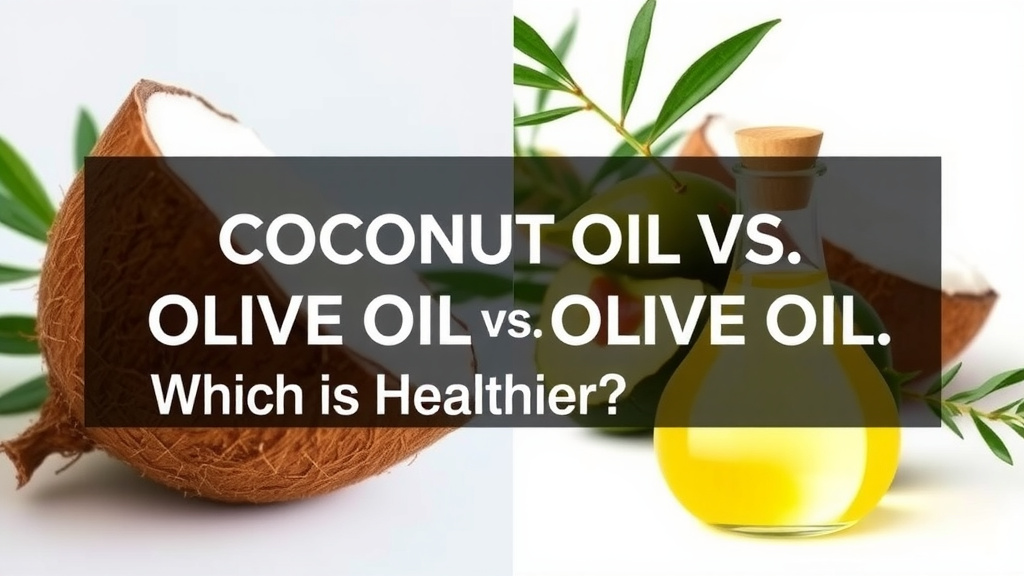
Coconut Oil vs Olive Oil: Which is Healthier?
When it comes to cooking oils, both coconut oil and olive oil have their benefits. For everyday cooking and heart health, olive oil is generally considered healthier. It’s packed with monounsaturated fats, which are great for your heart. Coconut oil is high in saturated fat, which can raise cholesterol levels. But it does contain medium-chain triglycerides (MCTs) that your body uses for energy.
Choosing between these two oils depends on your health goals and how you plan to use them. Olive oil is a staple in the Mediterranean diet for good reason. Its fat profile and antioxidants offer various health advantages. Coconut oil has gained popularity for its unique fatty acids and potential benefits, though research is ongoing. We’ve looked at the science to help you decide.
- Olive oil is generally healthier for daily cooking and heart health.
- It contains heart-healthy monounsaturated fats.
- Coconut oil is high in saturated fat but offers MCTs.
- Your choice depends on health goals and usage.
- Both oils can be part of a balanced diet.
Let’s dive deeper into the nutritional profiles and health impacts of both coconut oil and olive oil to see which one might be the better choice for your kitchen and your well-being.
“`htmlCoconut Oil vs. Olive Oil: Which Fat Reigns Supreme for Your Health?
Understanding the differences between coconut oil and olive oil is key. Both are popular in kitchens worldwide. But their nutritional makeup tells a different story about health benefits. We’ve researched what makes each oil unique. Let’s break down which one might be a better fit for your dietary needs and cooking style.
Unpacking the Fat Content: A Tale of Saturated vs. Unsaturated
The biggest difference lies in the types of fats each oil contains. This directly impacts how your body processes them.
Coconut Oil: The Saturated Fat Star
Coconut oil is famous for its high saturated fat content. About 90% of its fat is saturated. This is much higher than butter or lard. For a long time, saturated fats were viewed negatively. They were linked to increased LDL cholesterol, often called “bad” cholesterol. This can be a concern for heart health (National Institutes of Health).
What About MCTs?
But coconut oil isn’t just saturated fat. It contains medium-chain triglycerides (MCTs). MCTs are metabolized differently. Your body absorbs them more quickly. It sends them straight to the liver. There, they can be used for energy or turned into ketones. Some research suggests MCTs might help with weight management and brain function. However, more studies are needed to confirm these benefits in humans.
Olive Oil: The Monounsaturated Champion
Olive oil, especially extra virgin olive oil (EVOO), is a star when it comes to unsaturated fats. It’s rich in monounsaturated fatty acids (MUFAs). MUFAs make up about 73% of its fat content. MUFAs are known for their heart-health benefits. They can help lower LDL cholesterol and raise HDL cholesterol, the “good” kind. This makes them a friend to your cardiovascular system (Mayo Clinic).
Antioxidants Galore
Beyond healthy fats, EVOO is packed with antioxidants. These include polyphenols and vitamin E. Antioxidants help fight cell damage from free radicals. This can reduce inflammation and lower your risk of chronic diseases. Think of them as tiny bodyguards for your cells!
Comparing Nutritional Profiles: A Quick Glance
Let’s put their key nutritional components side-by-side. This will give you a clear picture.
Here’s a simple table comparing 1 tablespoon (about 14 grams) of each oil:
| Nutrient | Coconut Oil | Olive Oil (Extra Virgin) |
|---|---|---|
| Calories | 120 | 120 |
| Total Fat | 14g | 14g |
| Saturated Fat | 12g | 1.5g |
| Monounsaturated Fat | 1g | 10g |
| Polyunsaturated Fat | 0.5g | 1.5g |
| Vitamin E | 0mg | 1.9mg (about 10% DV) |
As you can see, the fat profiles are vastly different. Olive oil offers a much healthier balance of fats for everyday use.
Health Impacts: What the Research Says
When we look at the overall health picture, olive oil tends to come out ahead for general well-being.
Heart Health: The Deciding Factor
For your heart, olive oil is a clear winner. Its high MUFA content is excellent for cholesterol levels. The Mediterranean diet, which is rich in olive oil, is consistently linked to lower rates of heart disease (Harvard Health Publishing). Guidelines from major health organizations often recommend replacing saturated fats with unsaturated ones, like those in olive oil.
Cholesterol Levels: Coconut Oil’s Challenge
Coconut oil’s high saturated fat content can raise both LDL and HDL cholesterol. While it may raise HDL, the increase in LDL is a concern for many people, especially those with existing heart conditions (American Heart Association). If you’re watching your cholesterol, you might want to use coconut oil sparingly.
Brain Health and MCTs: Potential, But Not Proven
The MCTs in coconut oil have generated excitement for potential brain benefits. Some studies suggest they might help with cognitive function. This is especially true for conditions like Alzheimer’s disease. However, these studies often use concentrated MCT oil, not just coconut oil. We need more robust research to confirm these effects for regular coconut oil consumption (Cleveland Clinic).
Culinary Uses: Where Do They Shine?
Your cooking habits also play a role in choosing the right oil.
Olive Oil: The All-Rounder
Extra virgin olive oil is fantastic for salad dressings, marinades, and finishing dishes. Its flavor adds a wonderful richness. You can also use it for sautéing at medium heat. Refined olive oil has a higher smoke point and a more neutral flavor, making it suitable for higher-heat cooking.
Coconut Oil: Best for Specific Flavors and High Heat
Coconut oil has a distinct tropical flavor. It’s great in certain baked goods, curries, and stir-fries where that flavor is welcome. It also has a relatively high smoke point, making it suitable for frying and roasting. Refined coconut oil has a neutral flavor and higher smoke point than virgin coconut oil.
Making the Healthiest Choice for You
So, which oil should you choose? It really comes down to your personal health goals and how you plan to use the oil in your kitchen.
- For everyday cooking and prioritizing heart health, olive oil is generally the superior choice. Its fat profile and antioxidant content are well-supported by scientific research.
- Coconut oil can be part of a healthy diet, but it should be consumed in moderation due to its saturated fat content. Its unique MCTs offer potential benefits, but more research is needed.
- Consider incorporating both oils into your diet. Use olive oil as your primary cooking fat and use coconut oil occasionally for specific flavors or recipes.
Here’s a quick checklist to help you decide:
- Prioritize olive oil for heart health.
- Limit coconut oil due to saturated fat.
- Use extra virgin olive oil for dressings.
- Consider refined oils for higher heat.
- Enjoy coconut oil for specific flavors.
- Balance your fat intake for overall wellness.
Conclusion
We’ve seen that both coconut oil and olive oil have unique nutritional profiles. For daily cooking and supporting your heart health, olive oil stands out. Its monounsaturated fats and antioxidants offer clear advantages. Coconut oil’s high saturated fat content means it’s best enjoyed in moderation. While its MCTs show promise, olive oil has more established health benefits for your cardiovascular system. You can certainly include both in your diet. Use olive oil as your go-to for everyday cooking and dressings. Reserve coconut oil for specific recipes where its flavor and properties are a great fit. Making informed choices about your cooking oils is a simple step towards better well-being.
Frequently Asked Questions
Is coconut oil bad for cholesterol?
Coconut oil’s high saturated fat content can raise your LDL (“bad”) cholesterol levels. While it may also increase HDL (“good”) cholesterol, the impact on LDL is a concern for heart health. Health organizations often recommend limiting saturated fat intake.
Can I use olive oil for high-heat cooking?
Extra virgin olive oil is best for lower to medium heat, like sautéing or baking. For high-heat frying or roasting, a refined olive oil or a blend with a higher smoke point is a better choice. Always check the smoke point for the specific oil you’re using.
Which oil is better for weight loss?
Research on weight loss and these oils is mixed. Some studies suggest the MCTs in coconut oil might boost metabolism. However, both oils are calorie-dense, so portion control is key for weight management. Olive oil’s heart-healthy fats are generally recommended for a balanced diet.
Does the type of olive oil matter?
Yes, the type matters! Extra virgin olive oil (EVOO) is the least processed and retains the most antioxidants and flavor. Refined olive oils are processed more and have a neutral taste and higher smoke point, making them suitable for different cooking methods.
Can I use coconut oil and olive oil together?
You can certainly use both oils in your kitchen. They each offer different benefits and flavors. For instance, you might use olive oil for a salad dressing and coconut oil for a tropical-flavored stir-fry. Just be mindful of the saturated fat content when using coconut oil.

![7 Best Of Nature Olive Body Oil [2026]](https://bestpureessentialoils.com/wp-content/uploads/2026/09/7-best-of-nature-olive-body-oil-2026-featured-768x432.jpg)